This post may contain affiliate links. Please read our disclosure policy.
Quick answer: Funiiki (фунийки) are Bulgarian cream horns: strips of buttery homemade dough wrapped around metal horn molds, baked at 350°F for about 30 minutes until golden and crisp, then filled with vanilla custard. They’re crunchy when baked and turn soft and tender after a night in the fridge, so make them a day ahead.

Funiiki are one of my favorite childhood desserts, and this is my grandmother’s recipe. I first shared these Bulgarian cream horns on CookingLSL in 2014. When I lived in the US, I made them again and again for friends and family, and they always disappeared first, partly because they’re so good and partly because hardly anyone makes them from scratch anymore.
They take a little patience: a simple butter dough, long strips wrapped around horn molds, and a pot of homemade custard. The reward is a buttery shell with a creamy vanilla center that gets even better the next day. That also makes them perfect for a holiday cookie tray, because you make them ahead and they’re ready when the guests arrive.
What Are Funiiki?
Funiiki are traditional Bulgarian pastry horns filled with custard. The name comes from “funiya,” meaning funnel, because of their shape. Unlike puff pastry cream horns, which are flaky, my grandmother’s version uses a homemade dough with melted butter, milk, and baker’s ammonia. The shells bake up crisp and sturdy, and the custard slowly softens them into the tender texture I remember from childhood.

Ingredients for Bulgarian Cream Horns
Pastry shells: flour, eggs, sugar, milk, melted butter, a pinch of salt, and baker’s ammonia or baking powder.
Butter, not oil. Some recipes use oil or yogurt, but butter gives my grandmother’s funiiki their rich flavor and crisp, sturdy texture. They aren’t overly crumbly or fragile.
Baker’s ammonia or baking powder. Baker’s ammonia (ammonium bicarbonate, амонячна сода, also called hartshorn) helps produce an especially crisp shell. Baking powder is a practical alternative, although the texture may differ. Baker’s ammonia has a strong smell during baking that should dissipate once these thin shells are thoroughly baked and cooled. Some other recipes use baking soda, but I prefer baker’s ammonia for this version.
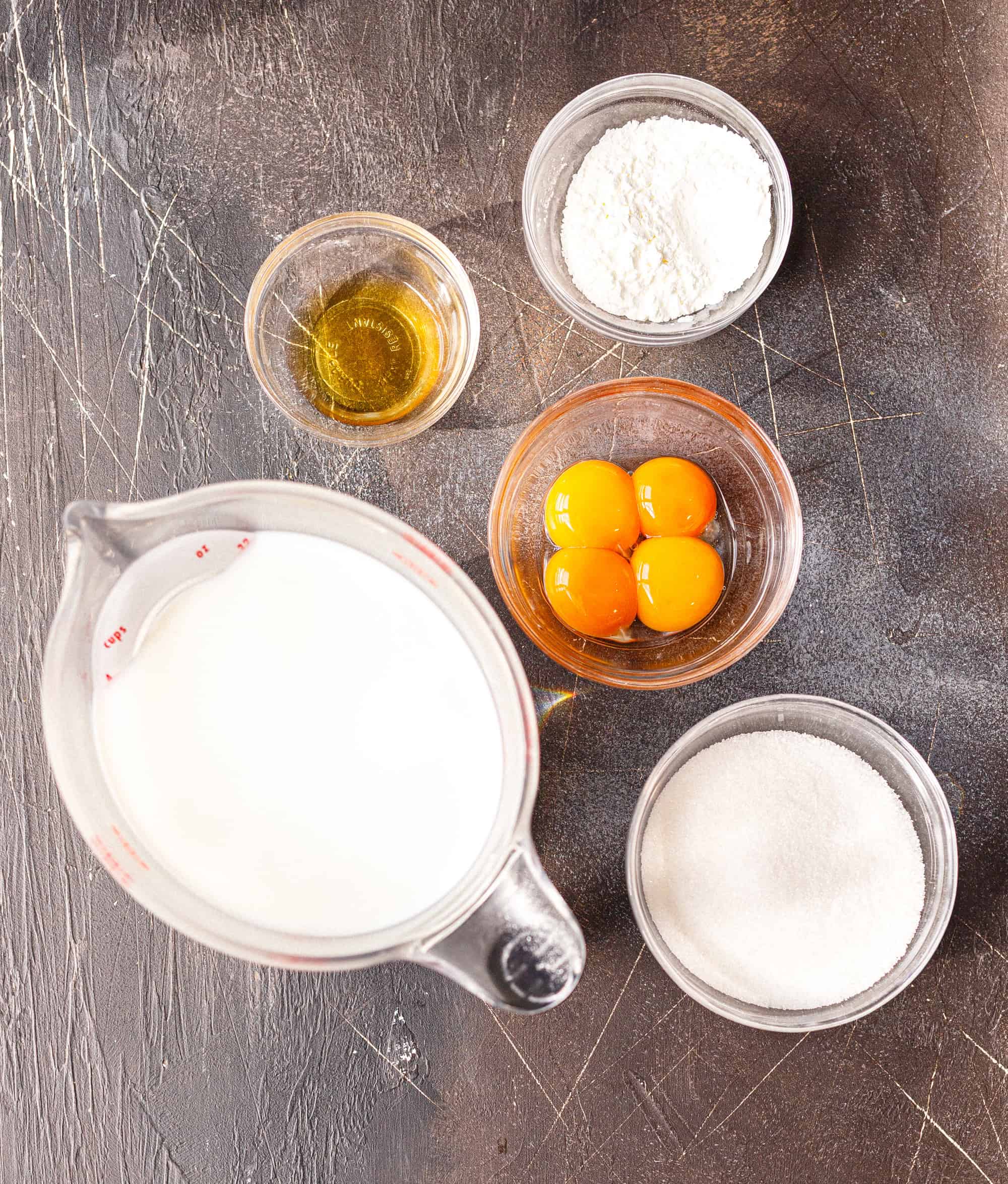
Vanilla custard: milk, egg yolks, sugar, all-purpose flour, butter, and vanilla. I make it from scratch, not from pudding mix. For more information, see my homemade custard (pastry cream).
Flour or cornstarch? For these pastry horns, I prefer flour to thicken the custard. I tried cornstarch in a recent batch, but that particular custard turned out thinner than I wanted. Cornstarch can make a thick pastry cream when used in the right amount and cooked correctly; my preference here is based on how this family recipe turned out. If you prefer a thicker flour-based custard, add another 1 to 2 tablespoons of flour.
Equipment: metal cream horn molds, a rolling pin, pizza wheel, baking pans, parchment paper, and piping bag. Years ago, we improvised molds from jar lids. Today I recommend purpose-made, oven-safe metal horn molds. You can find metal cream horn molds on Amazon. As an Amazon Associate, I earn from qualifying purchases.
How to Make Funiiki
1. Make the custard
Start with the custard so it has time to chill. Heat the milk and half the sugar. Beat the yolks with the remaining sugar until pale, then mix in the flour. Whisk in about 1 cup of hot milk to temper the eggs, return the mixture to the pot, and cook over medium heat, whisking constantly, until thickened and bubbling. Continue briefly to cook the flour thoroughly. Remove from the heat, stir in the butter and vanilla, cover the surface directly, and refrigerate promptly until cold.


2. Make and rest the dough
Beat the eggs with the sugar, then add the milk and melted, cooled butter. Whisk together the flour, salt, and baker’s ammonia (or baking powder), and mix into the wet ingredients. Knead for about 5 minutes until smooth. Cover and rest for 30 minutes to 2 hours so the dough rolls out more easily.


3. Roll and cut
Divide the dough in two. Roll each half into a rectangle about 5 mm thick and cut into long strips about 2 cm (¾ inch) wide. Keep the strips as even as possible.


4. Wrap the molds
Lightly grease the metal horn molds with melted butter. Starting at the narrow tip, wrap each dough strip around a mold, overlapping the edges slightly as you move toward the wider end.


5. Bake
Arrange on parchment-lined baking sheets and brush with lightly beaten egg white if desired. Bake at 350°F (175°C) for about 30 minutes, until golden and fully baked.

You can bake multiple trays together if your oven has room and heats evenly; rotate or swap tray positions as needed for even browning. Start checking early, especially if baking another round. Let cool for about 5 minutes, carefully slide off the molds, and cool completely on a rack.

6. Fill and refrigerate overnight
Pipe the cold vanilla custard into each completely cooled pastry horn. Dip the open ends in chopped walnuts or chocolate sprinkles, if desired. Cover and refrigerate overnight. This is when the magic happens: the crunchy shells absorb moisture from the custard and become soft and tender.
My Tips for the Best Funiiki
- Rest the dough so it rolls more easily and springs back less.
- Cut even strips for consistent baking.
- Overlap the strips so the horns hold their shape.
- Cool shells completely before piping the custard.
- Use a thick, chilled custard that holds its shape.
- Plan to serve the horns the day after filling.
Storage and Make-Ahead
Keep filled horns covered in the refrigerator and enjoy within 2 to 3 days. Because the filling contains eggs and milk, don’t leave them at room temperature for extended periods. Store completely cooled unfilled shells in an airtight container at room temperature, and refrigerate the custard separately until you’re ready to fill them.

Funiiki FAQ
Why are my pastry horns hard after baking?
That’s normal. The freshly baked shells are supposed to be crisp. They soften as they sit with the custard overnight in the refrigerator.

Do I need baker’s ammonia?
No. Baking powder is a practical alternative, although it won’t necessarily produce the identical crisp texture. Baker’s ammonia is my preference for this family version.
Are Funiiki the same as puff pastry cream horns?
No. Puff pastry horns are flaky and layered. These Bulgarian Funiiki use homemade butter-and-milk dough that bakes crisp and sturdy, then softens with the filling.
Can I use a different filling?
Yes. Whipped cream or other pastry creams can work, although they change how quickly the shells soften. Homemade vanilla custard is my favorite.
Can I make them ahead for the holidays?
Yes. Make the shells and custard ahead, fill the horns the day before serving, and refrigerate overnight.
If you grew up eating Funiiki, tell me in the comments how your family made them—with baker’s ammonia, baking soda, yogurt, or something else?


More Bulgarian Desserts
- Bulgarian Honey Cookies (Medenki)
- Bulgarian Easter Bread (Kozunak)
- Homemade Custard (Pastry Cream)
- Bougatsa
- Easy Bulgarian Recipes


Custard Filled Pastry Horns Recipe (Funnels/Funiiki)
Ingredients
- Shells:
- 2 eggs
- 6 cups flour
- pinch of salt
- 1 tsp baking soda
- 12 oz butter, , melted and at room temperature
- 3/4 cup sugar
- 1 cup milk, (room temperature)
- 1-2 tbsp melted butter for brushing
- optional – egg white for brushing before baking
- Custard:
- 4 egg yolks
- 4 cups milk
- 1 cup sugar
- 4 tbsp flour
- 1 tsp vanilla extract
- 8 oz soft butter
Instructions
- Custard:
- I recommend starting with the custard, since we need it to cool down before using it.
- In a deep pan combine milk and half of the sugar and bring to a boil. Reduce heat to medium. In a large bowl, using a mixer beat egg yolks and remaining sugar until pale. Add flour and mix well. Add 1 cup hot milk and carefully mix. Gradually add mixture to the remaining hot milk , constantly mixing, until it thickens (for about 5 minutes). Add butter and vanilla extract, mix well, remove from heat and set a side to cool down.
- Horns:
- In a bowl of a stand mixer beat eggs with sugar, then add milk and butter. Sift flour with baking powder and salt and combine with liquid ingredients. Knead on low speed for 5 minutes. You can of course mix dough by hand, using a mixer is just a little easier.
- Divide dough in two parts. Using a rolling pin roll both parts into rectangles 5 mm thick. (Approximate size of each rectangle should be 20 inches long and 12 inches wide. Cut 3/4″ stripes of dough lengthwise, using a pastry or pizza knife. Grease metal horn molds and roll each stripe beginning at the tip of the mold, overlapping the layers slightly to almost cover the mold.
- Line baking sheets with parchment paper and preheat oven to 350F. Brush horns with lightly beaten egg whites (optional).
- Bake in batches until golden or about 30 minutes. Let them cool for 5 minutes and remove horns from molds. Place on a cooling rack and let them cool completely.
- To assemble the custard horns:
- Fill a piping bag with custard and pipe it into each pastry horn. You can use round, star or no tip.
- Pastry horns need to absorb moisture from the custard and get soft, so I recommend, that they are consumed after 24 hours. Pretty difficult!
- I hope you like the recipe! I’ll be sharing similar recipe for puff pastry horns in the future.
Nutrition
Nutrition information is automatically calculated, so should only be used as an approximation.