
This post may contain affiliate links. Please read our disclosure policy.
This creamy homemade custard is a classic dessert you can make from scratch in minutes. Smooth, thick, and perfectly sweet, it’s wonderful on its own or as a filling for cakes, pies, and pastries.
Think of it as your all-purpose vanilla pastry cream – a simple base that turns into endless variations, from homemade lemon custard to banana or even ice cream custard.
There’s something so comforting about whisking milk, egg yolks, and vanilla together over gentle heat until the mixture turns silky and golden.
This quick homemade custard is exactly that kind of magic – easy, cozy, and foolproof.

Table of Contents
What Is Homemade Custard
- Homemade custard, sometimes called boiled custard or pastry cream, is a mixture of milk, sugar, egg yolks, and cornstarch cooked slowly until thick. It’s the base for many desserts like trifles, éclairs, tarts, and puddings.
- This version doesn’t need a double boiler; it’s cooked right in a saucepan. The result is a smooth, rich homemade vanilla custard that thickens beautifully and holds up for cakes or spoon desserts.
Ingredients for Homemade Custard Recipe
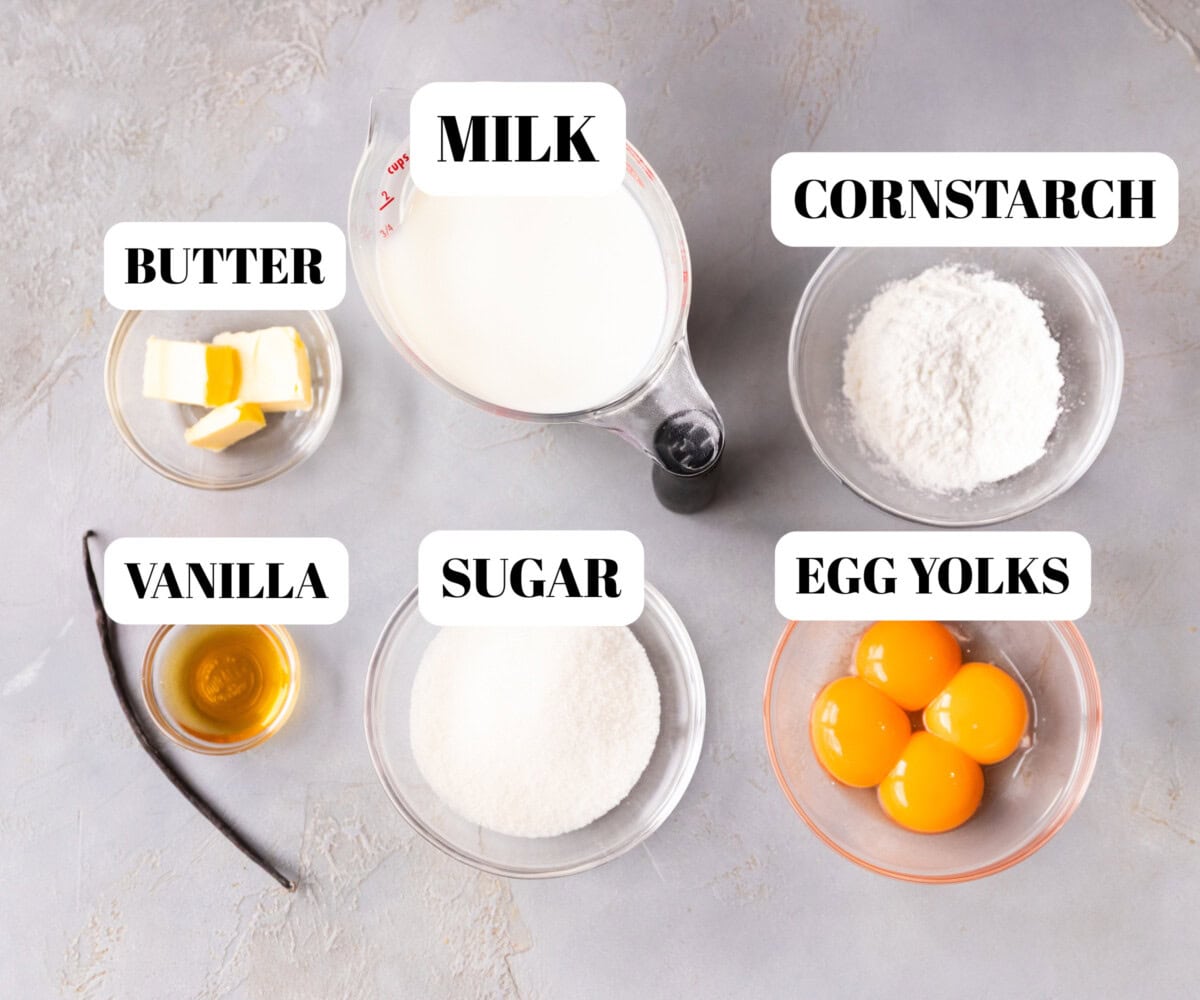
- large egg yolks
- whole milk (you can also use ½ milk, ½ cream for a richer version)
- sugar, divided
- cornstarch (or cornflour)
- vanilla extract or 1 vanilla bean
- unsalted butter, softened
Optional: pinch of salt, lemon zest for lemon custard, or mashed banana for homemade banana custard.
Variations For Egg Yolk Custard Recipe
- Homemade vanilla custard: Use a vanilla bean or pure extract.
- Homemade lemon custard: Add a teaspoon of lemon zest and replace some vanilla with lemon juice.
- Homemade baked custard: Pour into ramekins and bake in a water bath at 325°F until set.

Tips And `troubleshooting
Tips for Success
- Don’t walk away once the custard is cooking. It thickens fast and scorches faster. Keep whisking the entire time.
- Use whole milk. Lower-fat milk makes a thinner custard. For extra richness, replace half the milk with heavy cream.
- Strain through a fine mesh sieve even when it looks smooth — makes the texture noticeably silkier.
- Press plastic wrap directly onto the surface — touching it, not just covering the bowl — to prevent a skin.
- Add butter off the heat while still very hot. Gives a glossy, smooth finish.
Troubleshooting
Custard too thin: Didn’t reach 185°F. Return to medium-low heat and whisk 1–2 more minutes. Don’t rush with high heat.
Custard lumpy or grainy: Heat too high or left without stirring. Strain while warm or blend with an immersion blender.
Skin on top: Plastic wrap wasn’t touching the surface. Press it directly onto the custard, no air gap.
Dairy-free: Oat milk is the closest substitute. Full-fat coconut milk also works.
Why You’ll Love This Homemade Custard
• Thick, creamy texture that’s never watery
• Simple ingredients and ready in under 20 minutes
• Great as a filling for pastries or cakes
• Easy to adapt for lemon, banana, or vanilla flavor
• Naturally gluten-free

How to Serve Custard
Serve this quick homemade custard with fresh fruit, inside cream puffs, between cake layers, or chilled in small cups with berries. It’s also the perfect base for banana pudding, trifles, and other classic desserts.

More Recipes You’ll Love
- Medovik Cake
- Cake in a Jar
- Lemon Posset
- Pum kin Magic Custard Cake
- Vanilla Bean Ice Cream

FAQ About Homemade Custard
They refer to the same thing. Pastry cream is the professional French term (crème pâtissière), while custard is the familiar home-cooking name. A thin pouring custard like crème anglaise is different — much less starch, stays pourable rather than thick and pipeable.
You can, but the result will be lighter in color, less rich, and slightly less silky. Egg yolks give custard its golden color and creamy body. If substituting, use 2 whole eggs in place of 4 yolks.
Whole milk gives the best texture. 2% works but makes a slightly thinner custard. For extra richness, replace up to half the milk with heavy cream. For dairy-free, oat milk is the closest substitute.
Mira’s Note
This is one of those foundational recipes that makes everything else easier. Once you’re comfortable making it, eclairs, fruit tarts, Boston cream pie, and layered cakes all become straightforward — the filling is the same every time. Take your time on the stovetop, keep whisking, and trust the process.
If you make it, I’d love to hear how it turned out — leave a comment below!

Homemade Custard Recipe (Pastry Cream)
Ingredients
- 4 large egg yolks
- 1 2/3 cups whole milk
- 1/2 cup sugar, divided
- 3 tbsp cornstarch, (or cornflour)
- 2 tsp vanilla extract
- 2 tbsp unsalted butter, softened
Video
Instructions
- Warm the milk with half the sugar over medium heat until small bubbles form at the edges — just below a boil. Reduce heat to low.

- Whisk remaining sugar and cornstarch together, then add egg yolks and whisk until pale and smooth. Do this only when the milk is hot and ready.

- Slowly pour about 1 cup of hot milk into the yolk mixture in a thin stream, whisking constantly.

- Pour the tempered mixture back into the saucepan.

- Cook over medium heat, whisking continuously, until thick and coating the back of a spoon — about 3–5 minutes. Should reach 185°F (85°C).

- Remove from heat. Stir in softened butter until melted.

- Add the vanilla extract and mix well.

- Strain through a fine mesh sieve into a clean bowl.

- Press plastic wrap directly onto the surface — no air gap.

- Cool to room temperature, then refrigerate at least 2 hours. Keeps 3 days in the fridge.


Notes
- don’t mix yolks too early
- remove from heat as soon as thick
- immersion blender for lumps
- store 3 days plastic wrap on surface
Nutrition
Nutrition information is automatically calculated, so should only be used as an approximation.

LOVE LOVE LOVE!!!! I’m super busy but appreciate homemade foods, especially desserts. I made this recipe to use with cake and fruit in tiny, tall, clear dessert cups. It is so perfect! Clear directions and added notes made it so easy too. The taste is perfect! The texture – also perfect, even after storing in the fridge for a day. I can’t thank you enough! Thank you for posting it on the web.
Thank you so much for trying the recipe! Glad you liked it 🙂
ho! you said this makes 4 servings, how many cups is that?
Around 2 cups.
Extremely sweet, I’m typically not one to complain when it comes to sweet desserts as I have a sweet tooth but this recipie seems off, there’s way too much sugar for only 1 2/3 cup milk.
I added a lot more milk and more cornstarch to balance out the overpowering sugar and it increased the serving amount as well.
This is the classic standard French custard recipe. I have the notes for using less sugar in the blog post. Adding milk will not help, you need to reduce the amount of sugar.
A great base recipe, thank you. I’ve made it twice now. Today I left out the butter and added an extra 1/3 cup of milk.
Also added half brandy vanilla extract (homemade) and half vanilla paste, and a punch of salt.
Delicious.
Using it today to make a vanilla slice so I look forward to eating it tomorrow.
Glad you liked it! Thank you!!!
Great recipe but WAY too sweet. I halved the sugar and it’s still too sweet.
This is a standard custard/pastry cream recipe
This is so delish! I’m avoiding refined sugar, so I used coconut sugar to mix with the milk, and maple syrup with the cornstarch (and added about an extra 1.5 tbsp of cornstarch to account for the maple syrup).
When cooling, I also don’t like putting plastic wrap right on my hot food, so I always just whisk it every few minutes to prevent the skin from forming 🙂
Will definitely make this again!!
Glad you liked it Leah! Thanks for the comment!!!
Wow, what a great recipe…..my husband loved it! It’s so simple to make. I can see using it for so many other desserts. Thanks!
Glad you liked it 🙂
Muy bien explicada. Mil gracias por compartir