This post may contain affiliate links. Please read our disclosure policy.
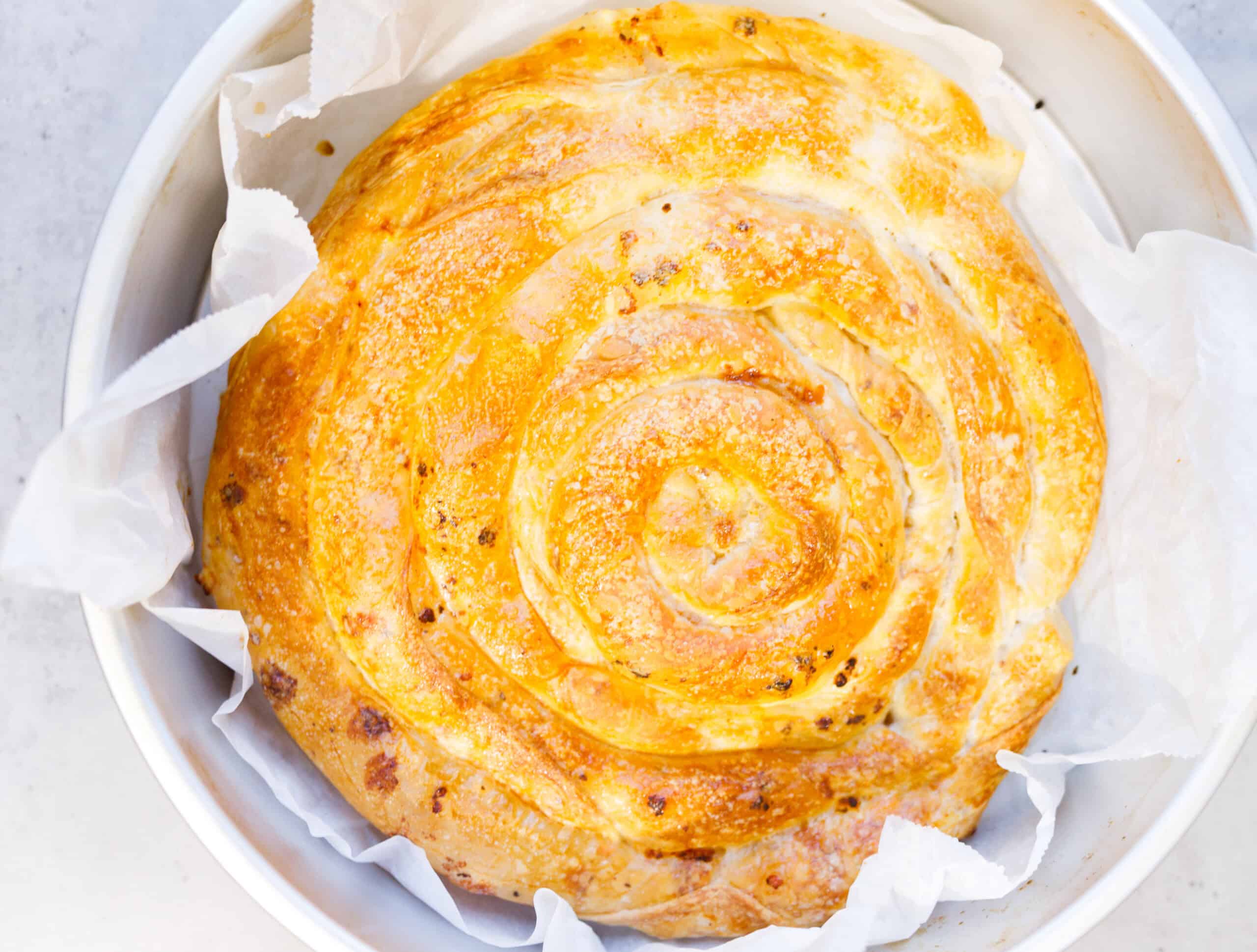
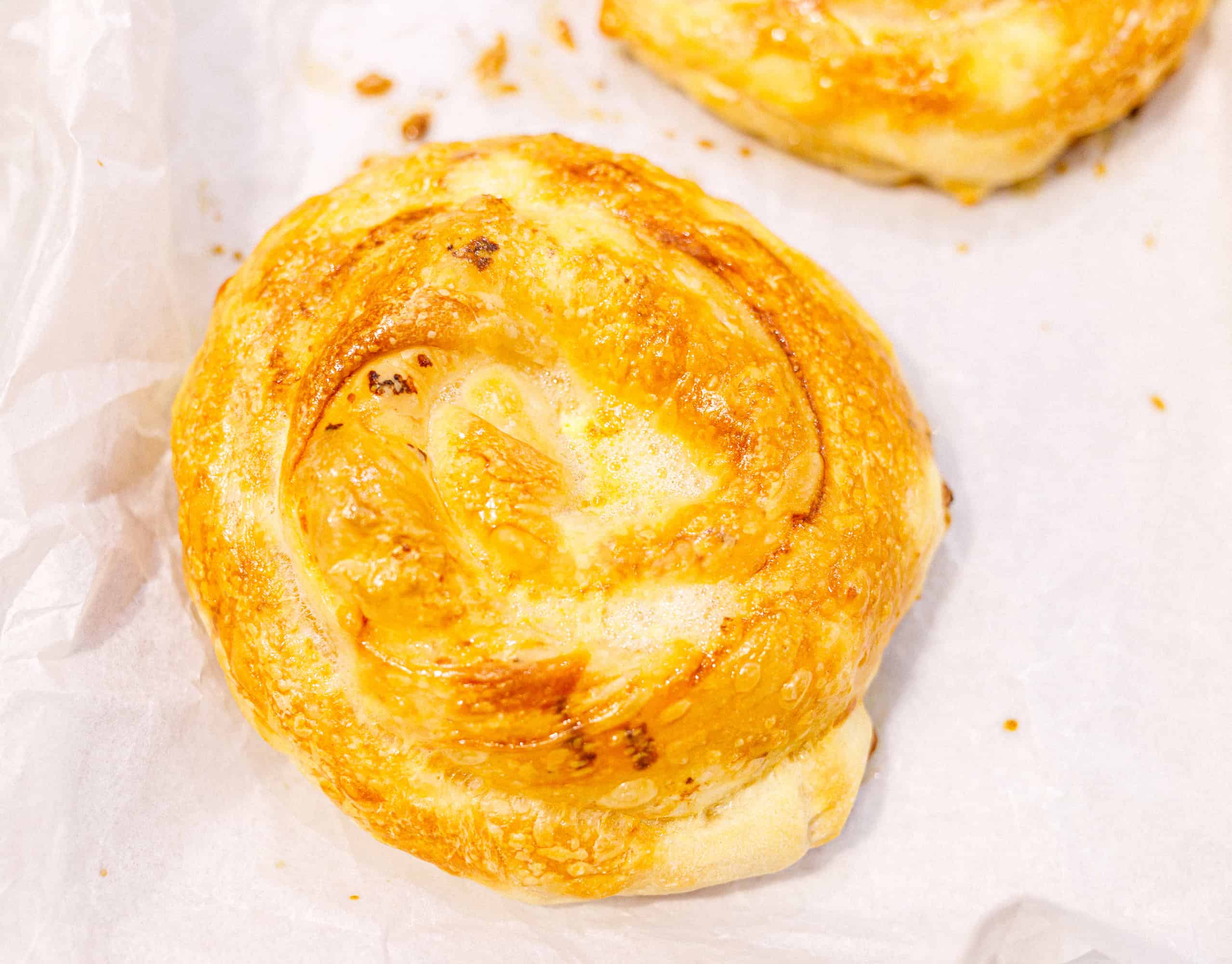
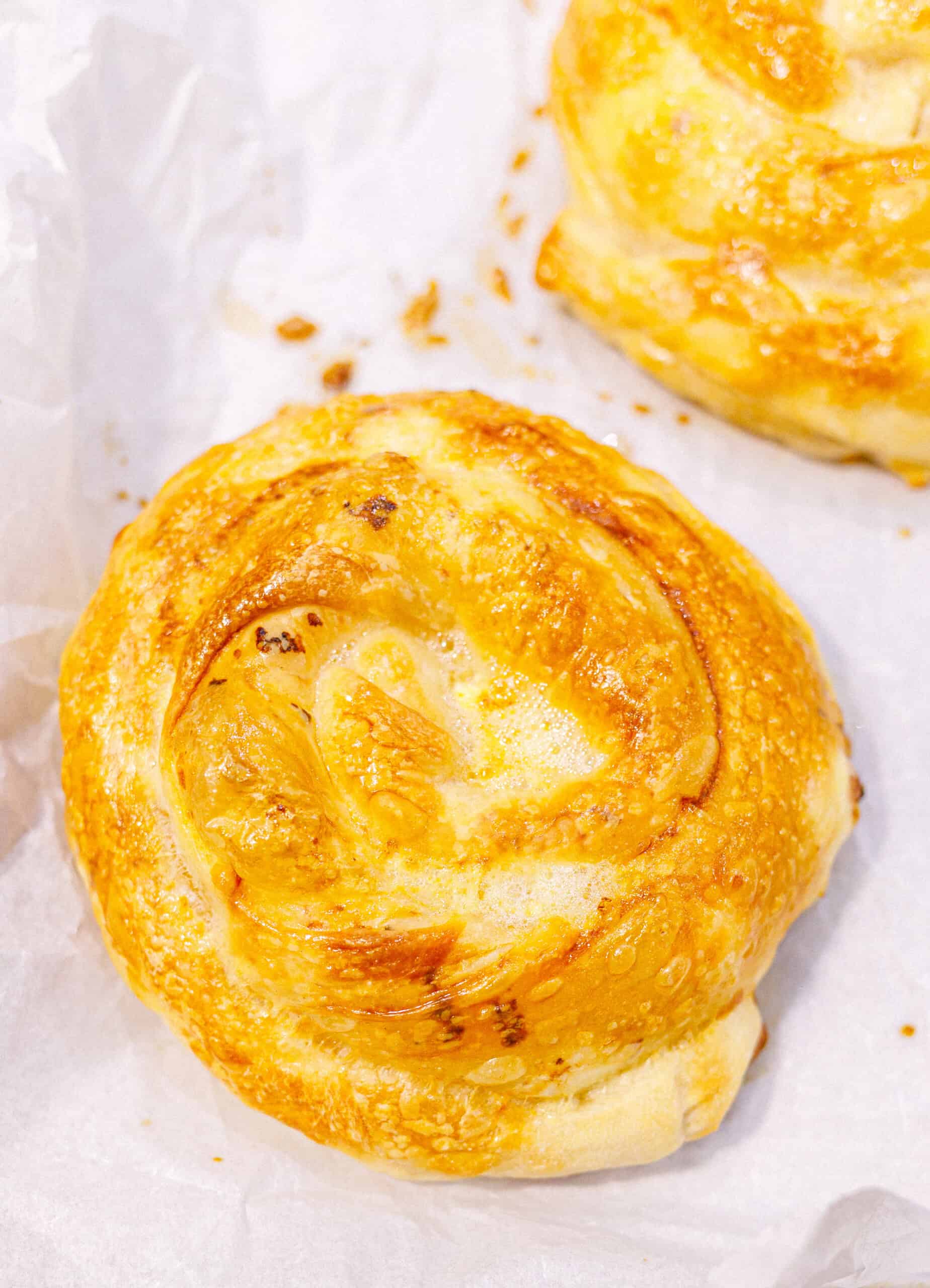
Bulgarian banitsa the way it’s made in Bulgaria: homemade dough stretched paper-thin by hand, layered with butter and white cheese, coiled into a swirl and baked golden.
When I was little, my grandma would make a few banitsas whenever she had a day off. She’s from a village in the Rila Mountains, and she was always beautiful and put together.
I stood next to her, watching, and helped her stretch the dough over the tablecloth.
She’s older now, but this is still her Bulgarian banitsa: homemade dough stretched paper-thin by hand, brushed with butter, scattered with crumbled white cheese, then rolled into a rope and coiled into a swirl.
Flaky, buttery layers outside, soft and salty cheese inside.
In Bulgaria, it’s breakfast, holiday food and comfort food all at once.
The first time I made it myself, I was living in the US, and my banitsa always came out thick. Back in Bulgaria, with the right flour, a little of her wisdom and a lot more patience, it finally tastes like hers.
It’s not perfect, and it doesn’t have to be. Everything I learned is in the tips below.
I also tested this banitsa recipe two faster ways: store-bought filo banitsa and rice paper banitsa. Those are great for busy days. This homemade banitsa is the one to make on a slow morning when you want the real thing.
What Is Banitsa?
Banitsa (banica) is a traditional Bulgarian cheese pie made with thin sheets of pastry and a filling of white brined cheese, butter and often eggs. Every family has its own version: layered, rolled, swirled, with spinach, leeks or pumpkin. This one is the classic cheese swirl, made with hand-stretched filo instead of a package.
Ingredients You’ll Need
- Strong bread flour: higher protein helps create stretchy dough. All-purpose flour can work, but the texture and handling may differ.
- Vinegar: a teaspoon is traditionally used in some homemade doughs; the full resting time is the biggest help for stretching.
- Oil: in the dough and on your hands and tablecloth while stretching.
- Bulgarian white cheese (sirene) or feta: salty, tangy and crumbled fine. Greek feta is an accessible substitute.
- Butter: melted and drizzled over each sheet for flaky layers.
- Egg and oil: brushed over the top for a golden finish.
How to Make Bulgarian Banitsa
1. Make and rest the dough
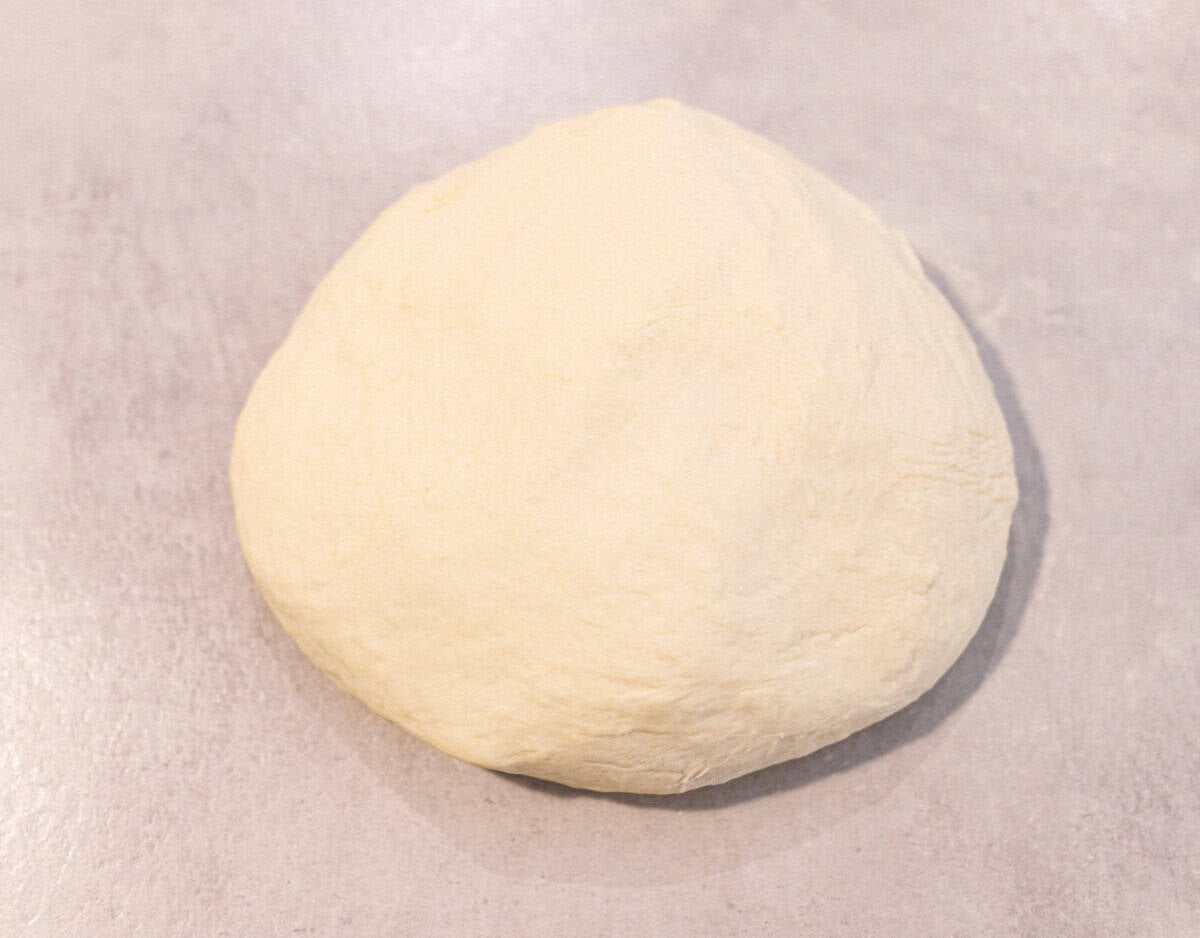
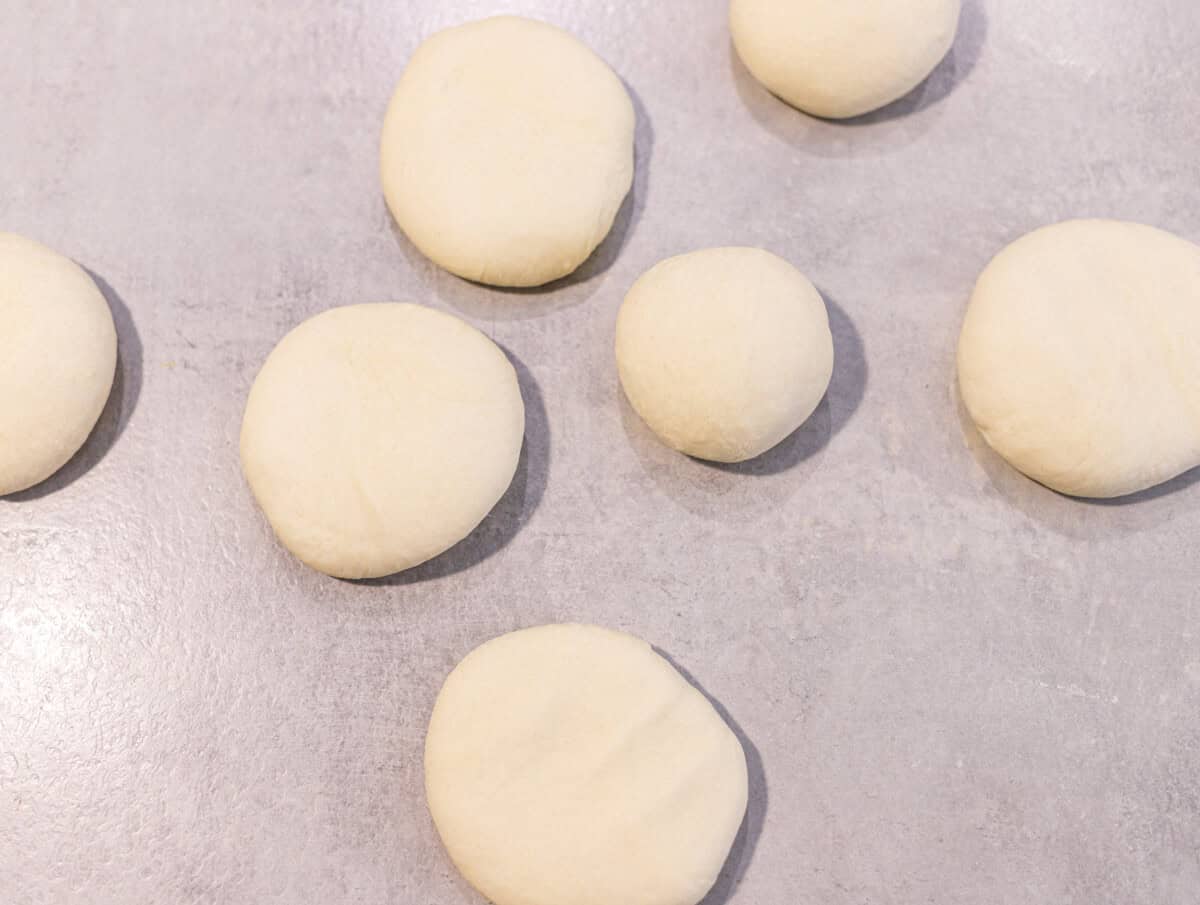
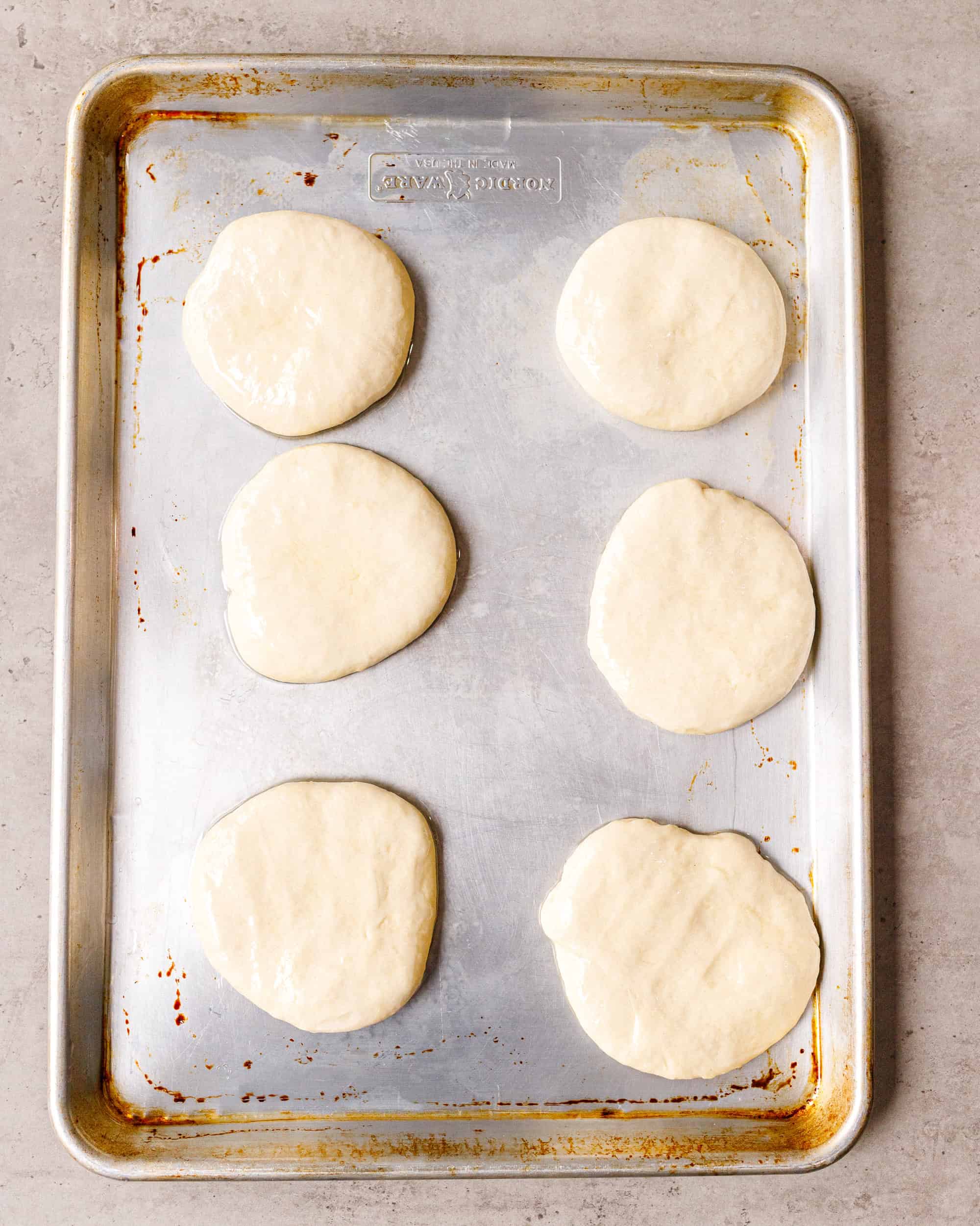
Knead the flour, lukewarm water, salt, vinegar and oil into a smooth, soft ball. It should feel supple rather than sticky. Divide into 5–6 pieces, oil each well, cover and rest 50–60 minutes. Rested dough stretches more easily.
2. Stretch the homemade filo
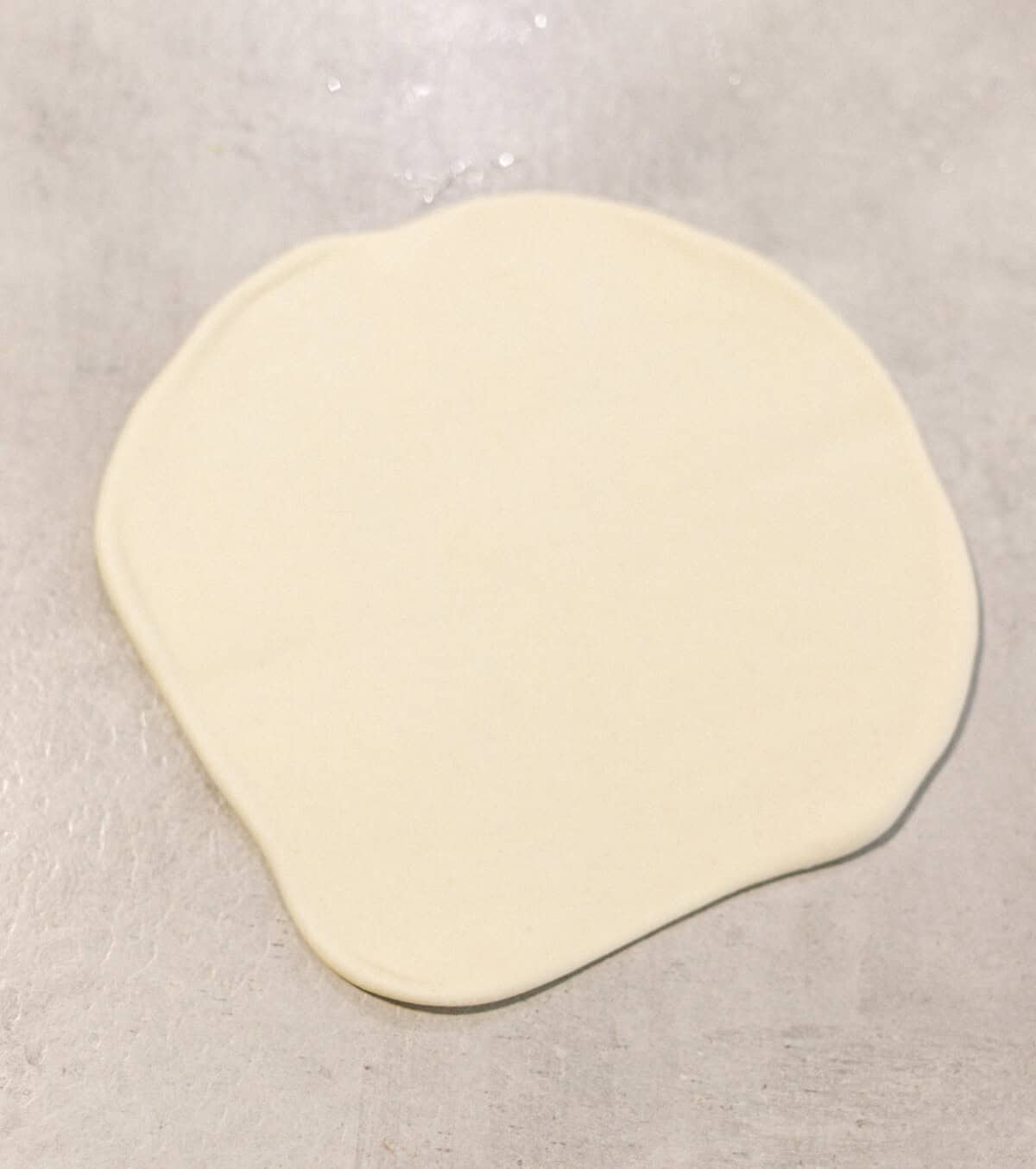
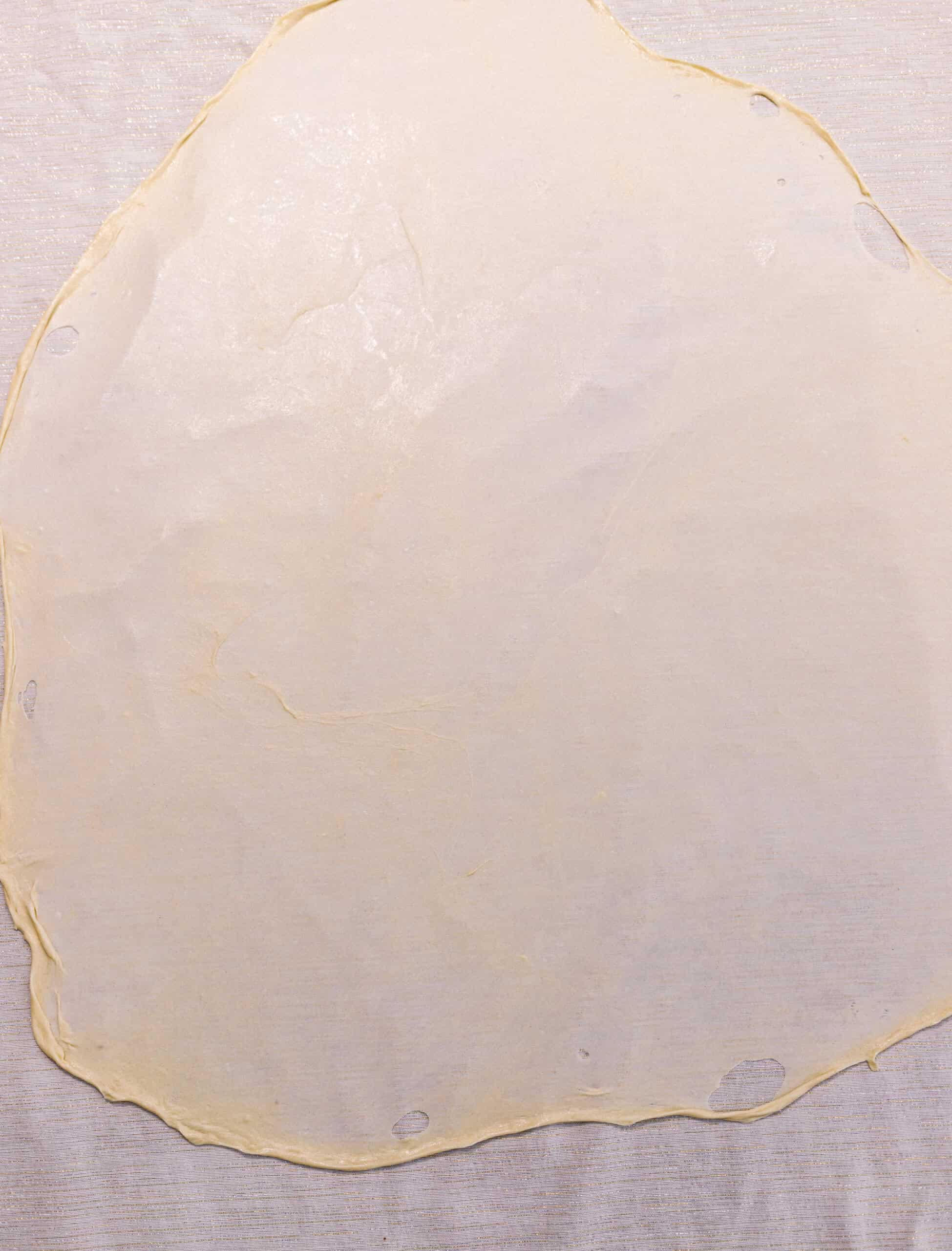
Lightly oil a clean tablecloth on a large table. Flatten one piece, then work it outward over the backs of your hands, gently pulling from the edges until paper-thin. A few small holes are fine.
3. Fill, roll and coil
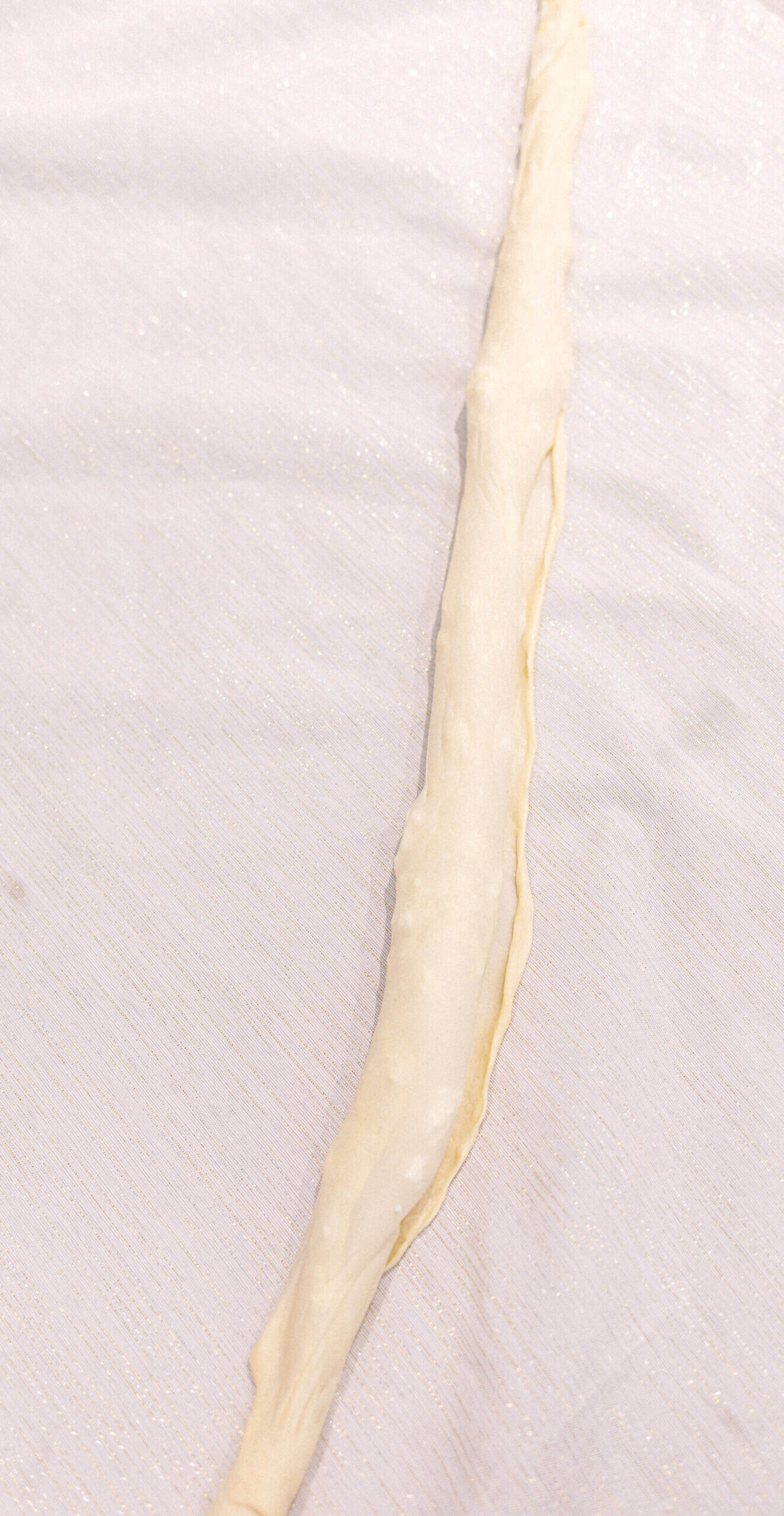
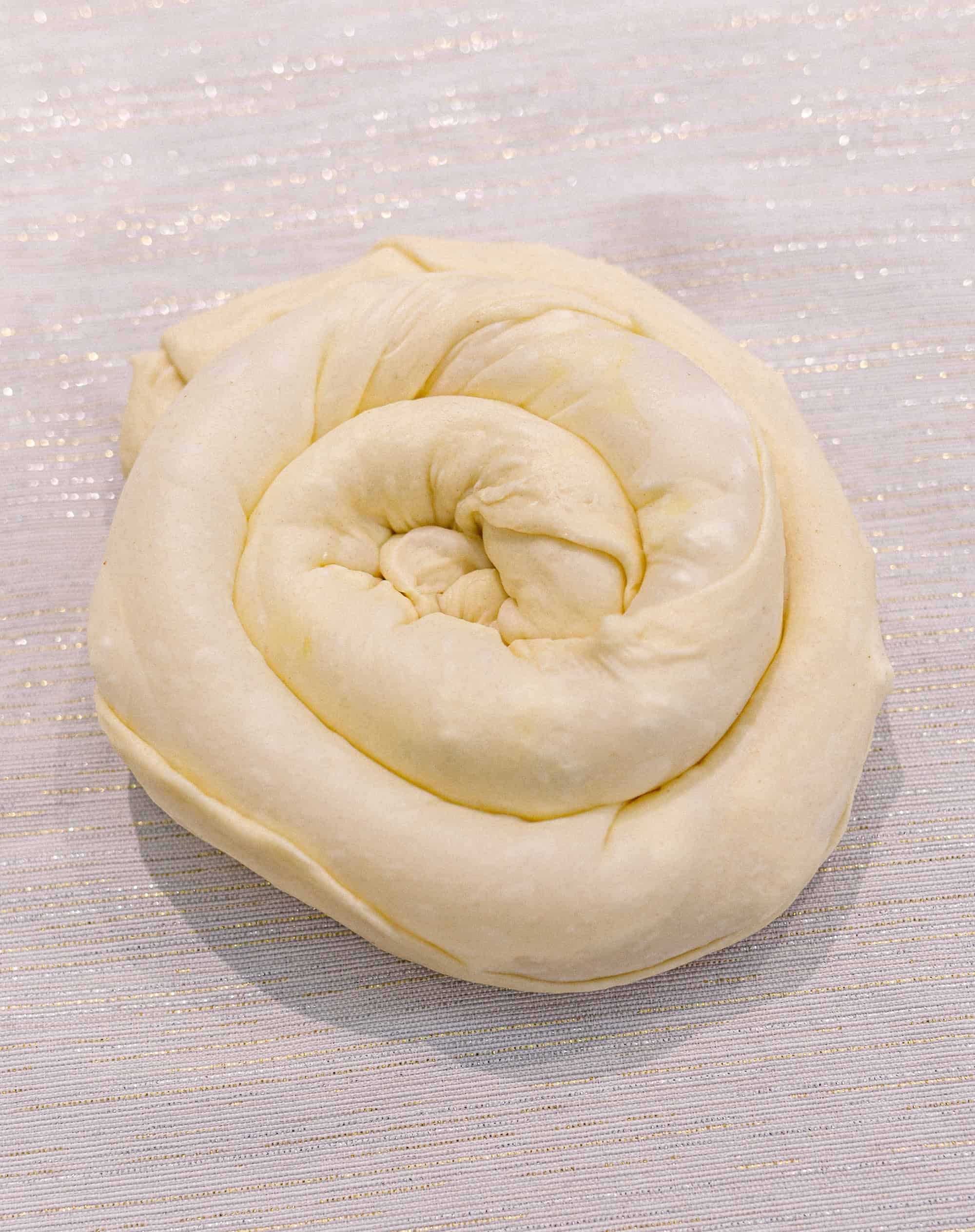
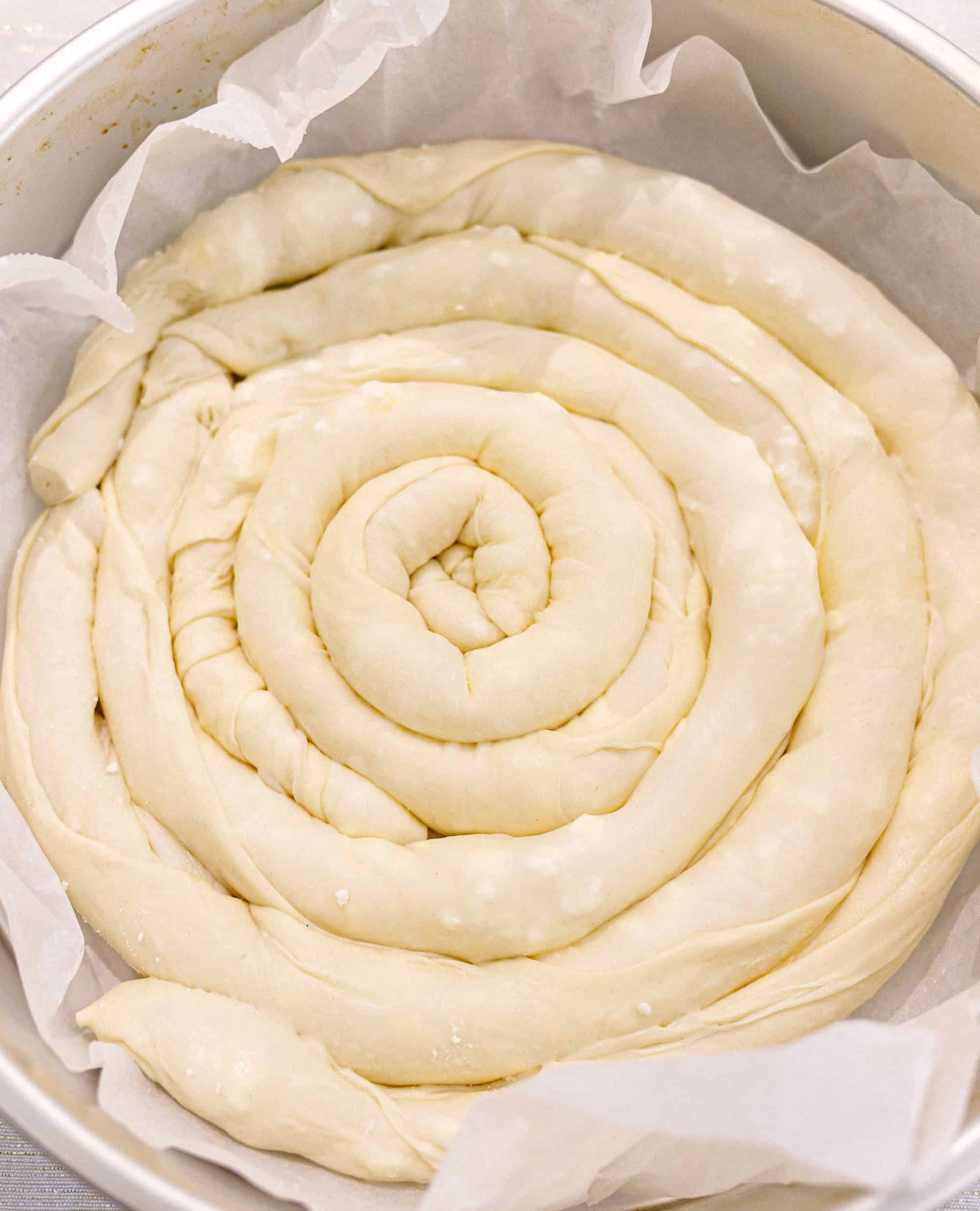
Drizzle with melted butter and scatter finely crumbled cheese over the sheet. Lift one side of the tablecloth to help roll the dough into a log, then gently lengthen it into a rope. Coil it from the center of a greased 10–11-inch (26–28 cm) round pan. Continue with the remaining pieces.
4. Bake until golden
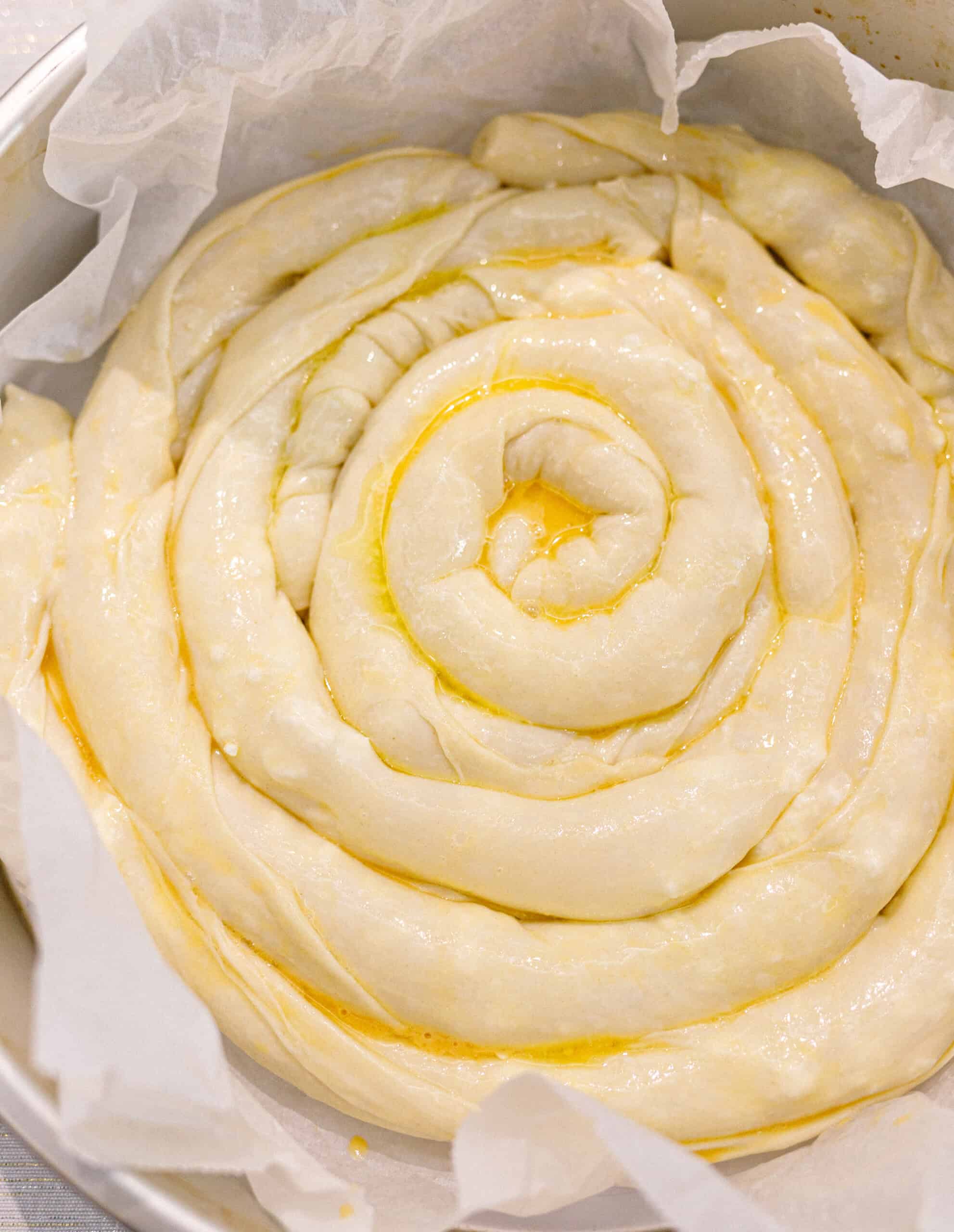
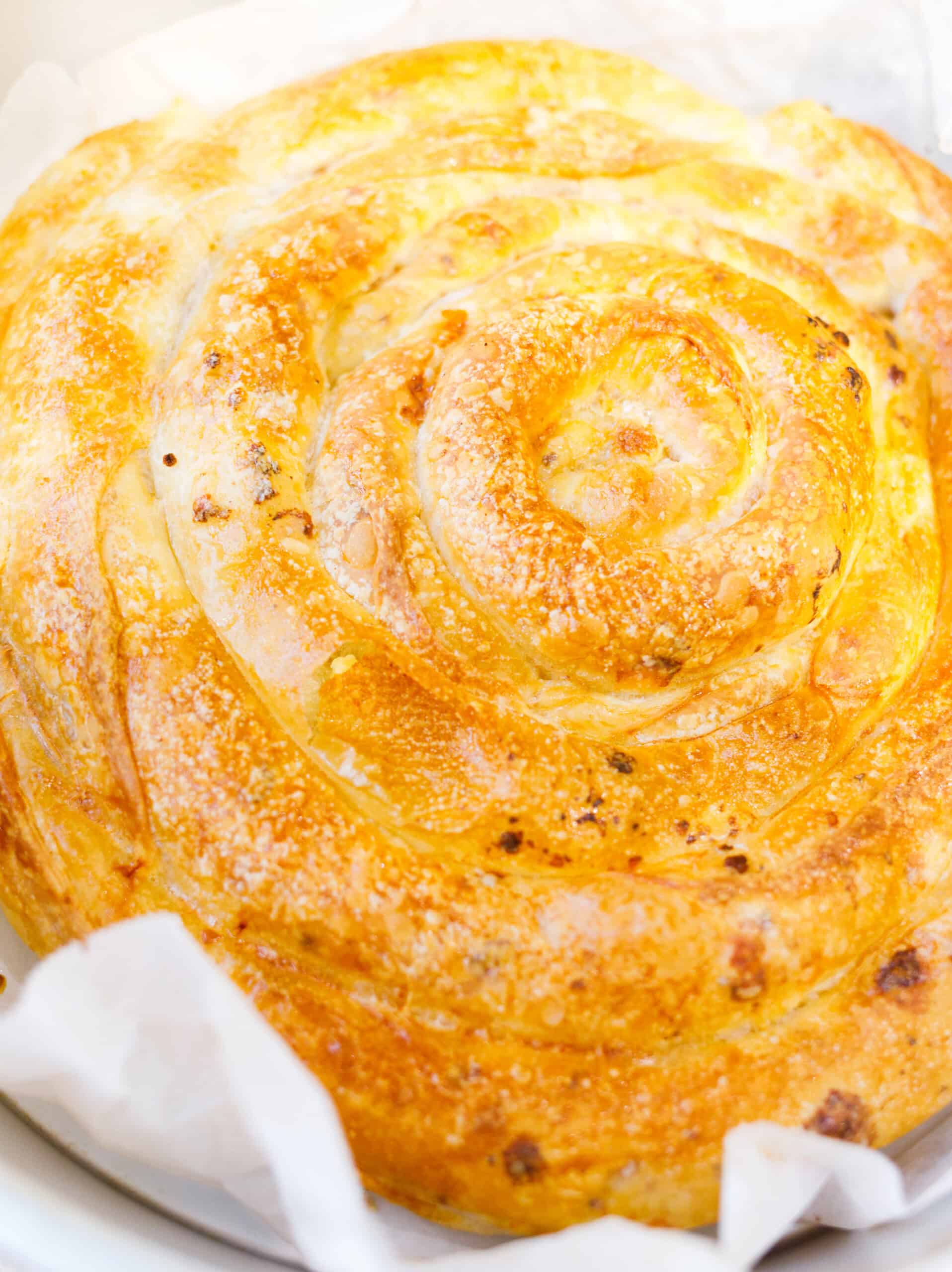
Brush the top with beaten egg and oil. Bake at 200°C / 390°F for 35–40 minutes, until deep golden and cooked through. Cool about 10 minutes before serving.
Tips for the Best Homemade Banitsa
- Oil generously: oil the dough, your hands and the tablecloth to limit sticking and tearing.
- Use a large work surface: a table covered with a clean tablecloth gives each sheet room to stretch.
- Don’t panic about small holes: they disappear inside the coil.
- Crumble the cheese finely: distribute it evenly across each sheet.
- Bake until deep golden: pale pastry won’t have the same crisp exterior.
Why does homemade banitsa turn out thick?
Often the dough has not rested long enough, or it was stretched too quickly or not thinly enough. Bread flour can help, but the flour’s protein level, hydration, resting time and gentle stretching all matter. Aim for a sheet thin enough to almost see the tablecloth through it.
Make Ahead, Storage and Freezing
Banitsa is best freshly baked, but leftover slices make an easy breakfast. Cover and refrigerate for up to 3 days. Wrap cooled slices individually and freeze up to 3 months. Reheat in an oven or air fryer at 180°C / 350°F for about 8–10 minutes, until hot and crisp; timing depends on slice thickness. The microwave softens the layers.
What to Serve With Banitsa
In Bulgaria, banitsa is often served with plain yogurt, ayran (a salted yogurt drink), or boza. A tomato and cucumber salad makes a fresh savory accompaniment. Plain Greek yogurt is another easy option.
Frequently Asked Questions
Can I make banitsa with store-bought filo?
Yes. My Bulgarian Banitsa Recipe uses store-bought filo for a faster version.
What cheese is used in Bulgarian banitsa?
Bulgarian white brined cheese, called sirene. Feta is the closest widely available substitute.
Can I use all-purpose flour?
Yes, although dough made with strong bread flour may stretch more easily. Adjust the water gradually to get a soft, supple dough.
Can I roll the dough instead of stretching it?
Yes. Many Bulgarian cooks roll the dough thin with a long rolling pin. I stretch mine by hand over a tablecloth, the way my grandma did.
Why is my dough tearing?
It may need more resting time, a little more oil or gentler handling. Rest the dough for the full 50–60 minutes before trying again.
How do you eat banitsa?
Usually warm, for breakfast, with yogurt or ayran. Banitsa with fortunes is especially associated with New Year’s celebrations in Bulgaria.
Can I freeze banitsa?
Yes. Freeze cooled, wrapped portions up to 3 months and reheat until hot.
Bulgarian Banitsa With Homemade Stretched Dough
Ingredients
Dough
- 500 g strong bread flour, about 4 cups, depending on how measured
- 280-300 ml lukewarm water
- 1/2 tsp salt
- 1 tsp white or apple cider vinegar
- 2 tbsp oil, plus more for stretching
Filling
- 400 g Bulgarian white brined cheese or feta, crumbled
- 150 g butter, melted
Topping
- 1 egg, beaten
- 1-2 tbsp oil
Instructions
- Knead the flour, water, salt, vinegar and oil into a smooth, soft dough ball.
- Divide into 5–6 equal pieces. Oil each well, cover and rest for 50–60 minutes.
- Preheat oven to 200°C / 390°F. Grease a 10–11-inch (26–28 cm) round baking pan.
- Lightly oil a clean tablecloth and stretch one dough piece until paper-thin.
- Drizzle with melted butter and sprinkle with crumbled cheese.
- Lift the tablecloth to roll the dough into a log, then gently lengthen into a rope.
- Coil the rope into a swirl in the center of the pan. Repeat with remaining dough, continuing the spiral.
- Brush with beaten egg and oil.
- Bake for 35–40 minutes until deep golden and cooked through.
- Cool for 10 minutes and serve warm with yogurt or ayran.
Notes
More Bulgarian Recipes
Try my Rice Paper Banitsa, Store-Bought Filo Banitsa, and Easy Bulgarian Recipes collection.