
This post may contain affiliate links. Please read our disclosure policy.
Sea asparagus was the ingredient that stopped me in my tracks at a farmers market years ago. I’d never seen anything like them — tiny, jewel-bright, almost alien-looking, and intensely salty straight from the bag. I grabbed a handful, went home, and sautéed them in butter for about two minutes. That was it. Now I buy them every time I see them, and this simple sauté is still the best way I know to cook them.

What Is Sea Asparagus?
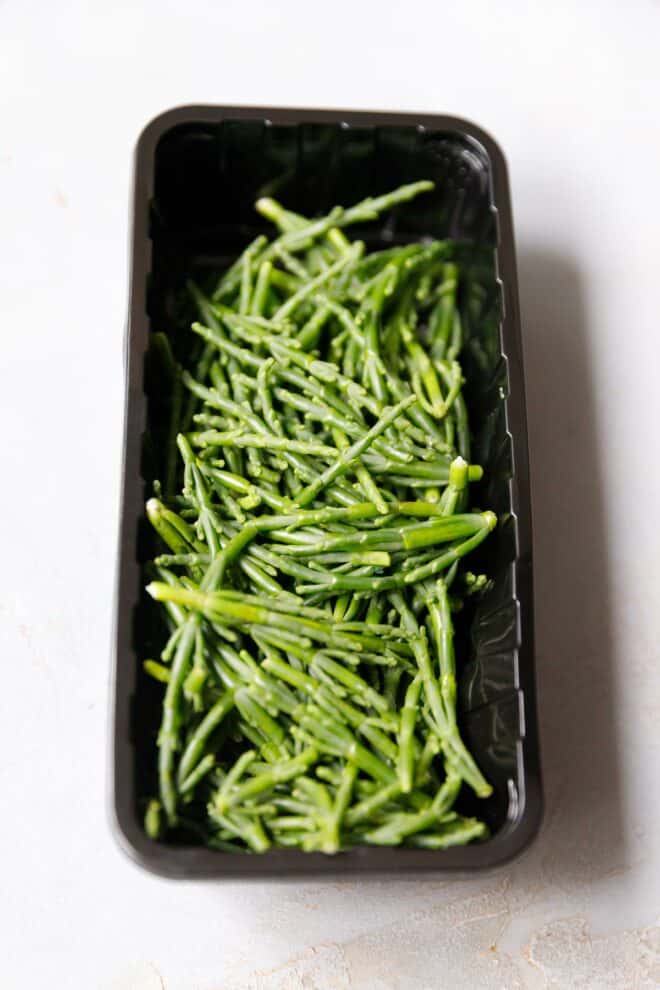
Sea asparagus — also called salicornia, sea beans, or samphire — is a coastal succulent that grows in salt marshes and tidal flats along the Pacific coast of North America (from Alaska to Mexico), the Atlantic coast, and the Gulf of Mexico. It thrives where the water is calm and the soil is salty.
Despite the name, it has nothing to do with regular asparagus. The stems are firm, snappy, and bright green, and they carry an intense natural saltiness absorbed from the seawater where they grow.
When you cook them briefly, they turn tender-crisp and taste somewhere between a green bean and the ocean — in the best possible way. Some nutrition scientists call salicornia a superfood: it’s low in calories, high in protein relative to its size, and a good source of Vitamin A, calcium, and iron.

How to Cook Sea Asparagus
The most important rule: speed. Sea asparagus needs no more than 2 minutes in a hot pan. Cook them longer and you lose the bright green color and the satisfying snap that makes them worth eating. High heat, fast cook, done.
I use a cast iron pan or heavy stainless steel — you want even, intense heat. A combination of butter and olive oil works best: the butter adds richness and flavor, the oil raises the smoke point so the butter doesn’t burn before the asparagus is done.
The single most important tip I can give you: taste before you add any salt. Sea asparagus is already aggressively salty from the sea water. Many batches need zero added salt. Add a pinch at the very end only if it genuinely needs it, then taste again.

Recipe Tips
Store fresh (uncooked) sea asparagus unwashed in the fridge for up to 2 weeks. It may darken slightly over time but still tastes fine. Cook as soon as possible for the best color.
Taste before you salt. I keep repeating this because it matters every single time. The saltiness varies batch to batch — some bags need nothing added at all.
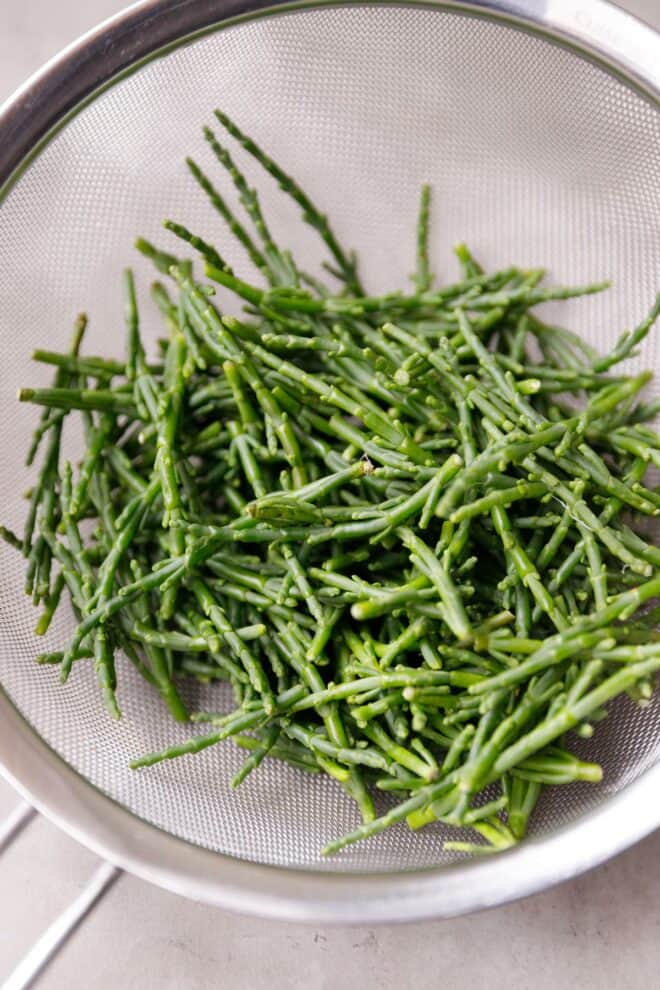
Pat them dry before cooking. Any surface moisture will steam the asparagus instead of sautéing it, and you’ll lose the caramelization on the outside.
Trim the woody ends. Cut about 2 cm off the bottom — the very base can be tough and fibrous. The rest of the stem is completely edible.
Cook in batches if needed. Don’t crowd the pan or they’ll steam instead of sauté. One layer, high heat, two minutes maximum.

Finishing & Topping Ideas
Sea asparagus is excellent on its own with just a squeeze of lemon or lime — the acid cuts through the salt beautifully. But if you want to take it further:
Shaved Parmesan — just a little, because the asparagus is already salty.
Sesame seeds + a few drops of sesame oil — gives it a clean, Asian-inspired flavor that works especially well served alongside fish.
Hot pepper flakes or cayenne — heat plays really well against the salt. Start with a small pinch.
Crispy bacon bits — makes it more substantial; great for brunch.
Toasted pine nuts or chopped walnuts — adds a nutty crunch that balances the brininess.
How to Store Cooked Sea Asparagus
Cooked sea asparagus keeps well in an airtight container in the fridge for up to 2 days. They stay surprisingly crunchy even after refrigerating — I actually like them cold the next day tossed into a salad.
Drying Sea Asparagus
To dry and preserve them: blanch first (boil for 1 minute, then immediately transfer to a bowl of ice water to stop the cooking). Pat completely dry, then use a food dehydrator or air dry at room temperature. Store in an airtight container for up to 2 months. To rehydrate: soak in hot water for 15 minutes, drain and rinse.
Can You Freeze Sea Asparagus?
Yes. Blanch them first (same method as above — 1 minute boil, then ice water), dry thoroughly, and pack into freezer bags. They keep in the freezer for up to 2 months. Frozen sea asparagus works best in cooked dishes rather than fresh salads, as the texture softens slightly after thawing.
Where to Find Sea Asparagus
Sea asparagus shows up at farmers markets in coastal states (especially California, Oregon, Washington, and the Gulf Coast) from late spring through summer. Asian grocery stores often carry them — look near the fresh seafood or specialty produce section. Some Whole Foods and specialty grocers stock them seasonally. If you can’t find them locally, a few online seafood suppliers ship fresh salicornia.
What to serve with?
You can serve them with eggs, use in frittatas, add to sandwiches, wraps or salads. Serve with Baked Halibut, Grilled Filet Mignon of Air Fryer Chicken Breast.
Final Thoughts
Sea asparagus is one of those ingredients I love putting on the table and watching people’s faces when they try it for the first time. It looks unusual, it’s aggressively salty, and it’s unlike anything most people have tasted before — but it converts almost everyone immediately. If you spot it at a farmers market or specialty store, grab it. Two minutes in a pan and it’s ready. You won’t regret it.
If you make this recipe, I’d love to hear how it turned out!
More recipes with sea asparagus:
- Sea Asparagus Salad
- Sea Beans Recipe
- Korean Sea Asparagus


Sea Asparagus
Ingredients
- 1/2 lb 250 grams Salicornia (Sea Asparagus/Sea Beans/Samphire Greens)
- 1 tbsp butter or ghee
- 1 tbsp olive or vegetable oil
- 2 pinches black pepper
- 2 pinches salt, or more to taste
- Optional:
- 1 tbsp freshly squeezed lemon juice
- 1 tbsp sesame seeds
- 1 tsp hot pepper flakes
Instructions
- Wash and pat dry asparagus. Trim the ends (I cut about 2 centimeters at the end).
- Heat oil and butter in a cast iron pan of wok.
- Add the greens.
- Cook at medium-high heat for 2 minutes, turning a few times
- Transfer to a plate. Drizzle with lemon juice and add toppings of your choice.
- Serve.
- Store in the fridge in an air-tight container for up to 2 days.
Nutrition
Nutrition information is automatically calculated, so should only be used as an approximation.



Made this one a few times. It’s always a crowd pleaser