This post may contain affiliate links. Please read our disclosure policy.
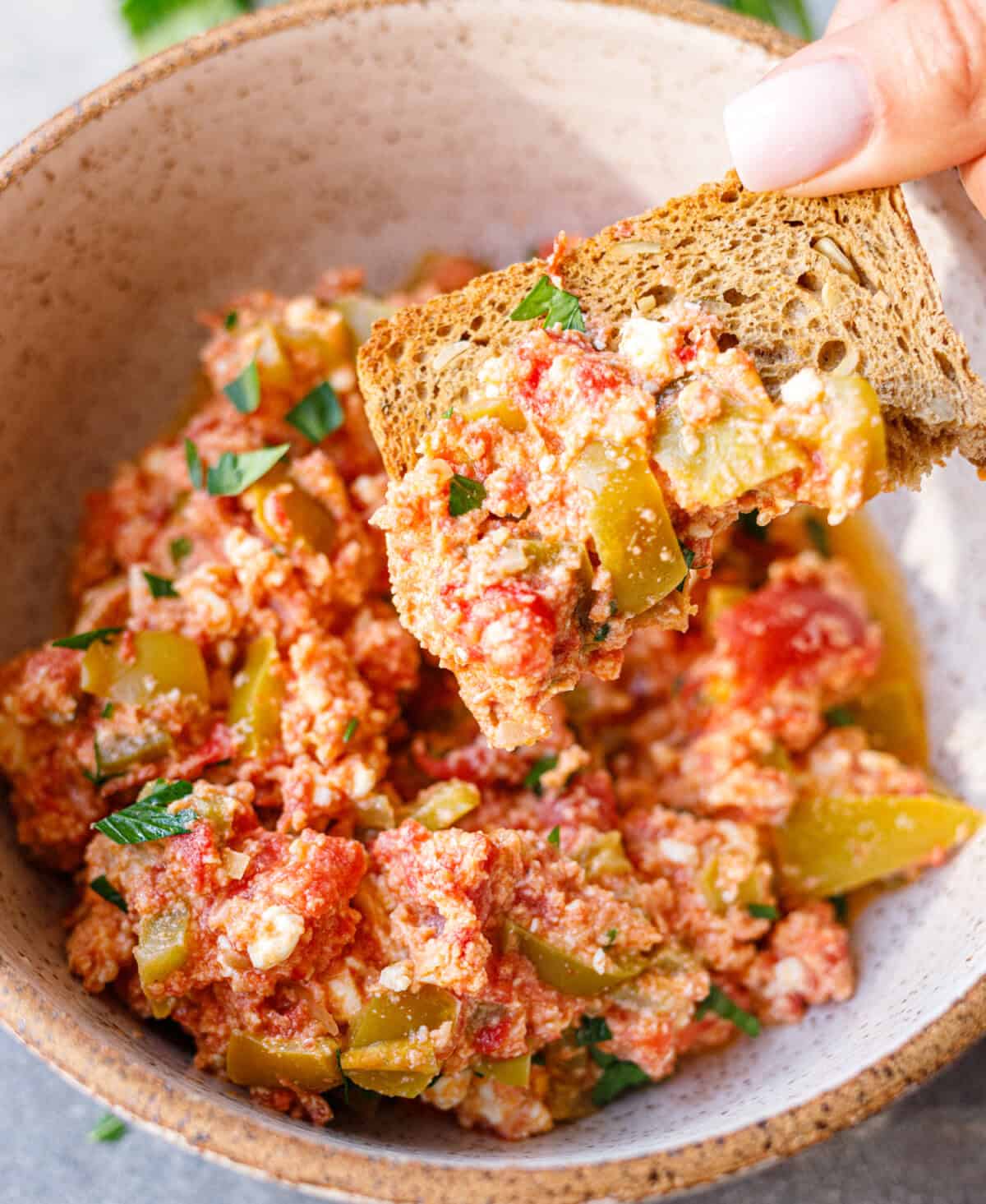
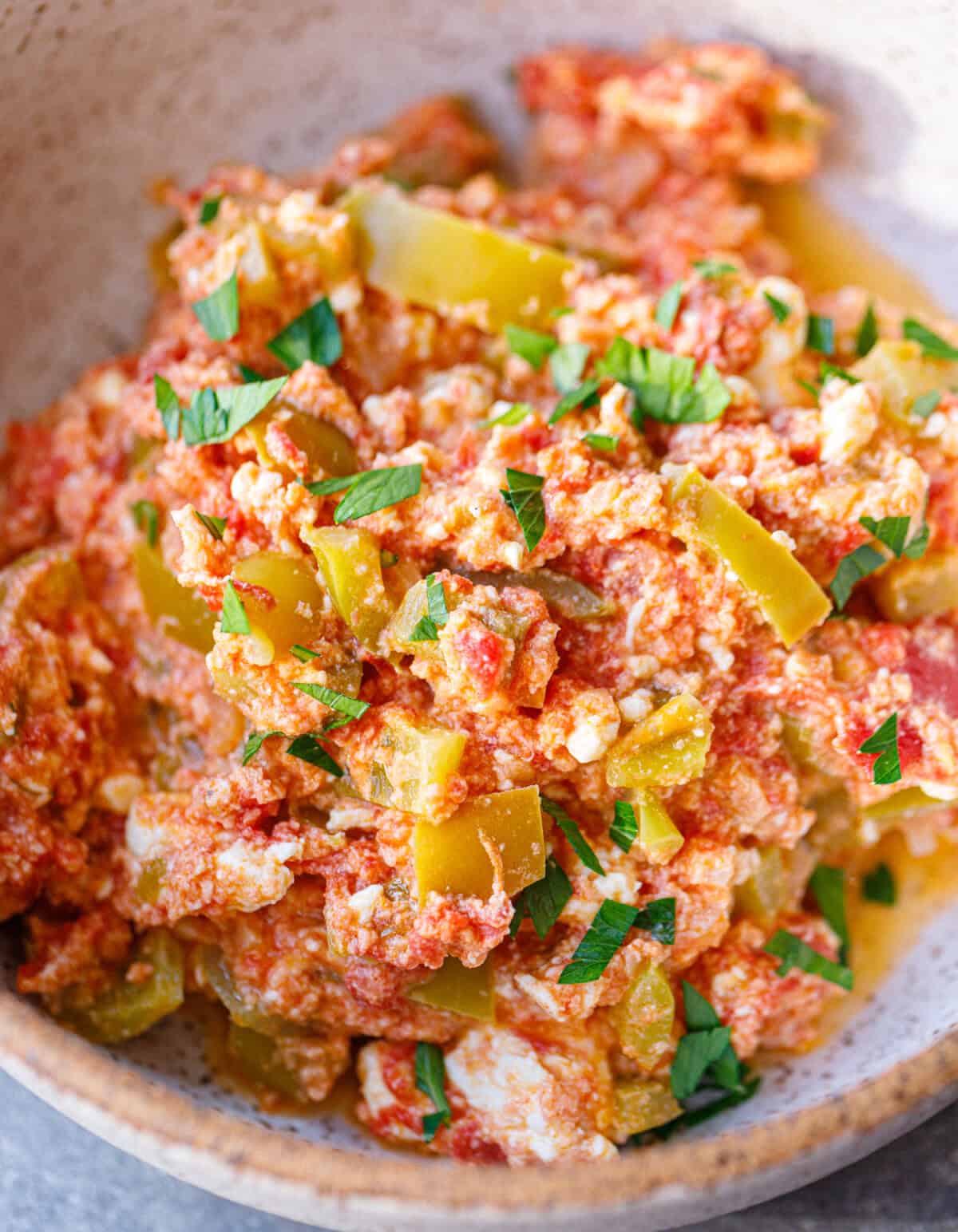
Mish mash is a Bulgarian one-pan dish of peppers and tomatoes cooked down until thick, then finished with beaten eggs and crumbled feta.
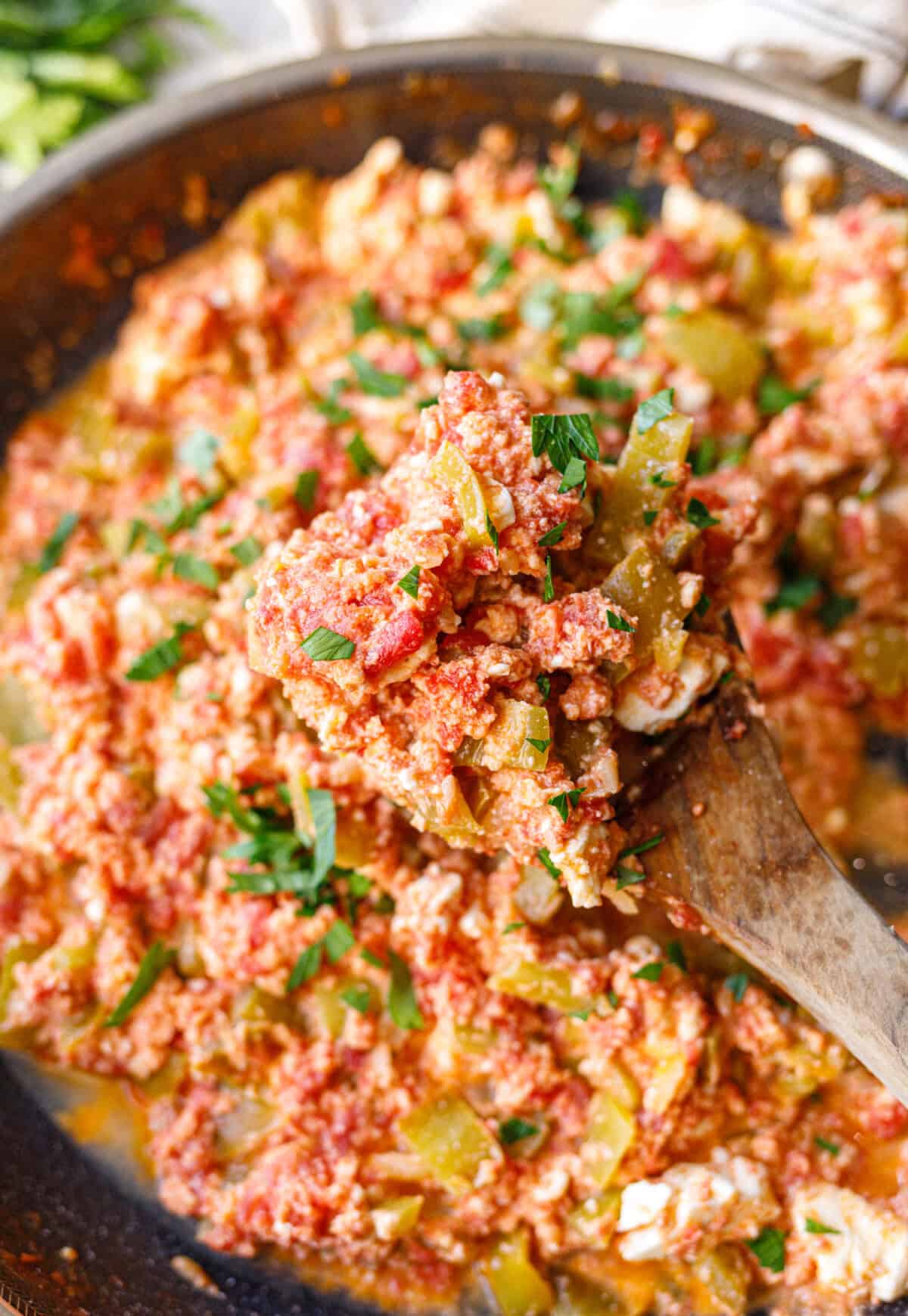
This is my favorite thing to eat, and I’m not going to pretend I eat it sensibly. It’s peppers and tomatoes cooked down until thick, eggs stirred through, feta crumbled over the top — and then I go through an unreasonable amount of bread getting it out of the pan.
One skillet, about half an hour, and it’s genuinely a high-protein meal, which is the part that lets me feel fine about the bread.
Mish mash is Bulgarian. You’ll find versions of it labeled Turkish, and I’m not arguing with anyone about who got there first — I’m sharing it the way it’s made where I’m from, alongside the rest of my easy Bulgarian recipes.
The one step I don’t skip is peeling the tomatoes.
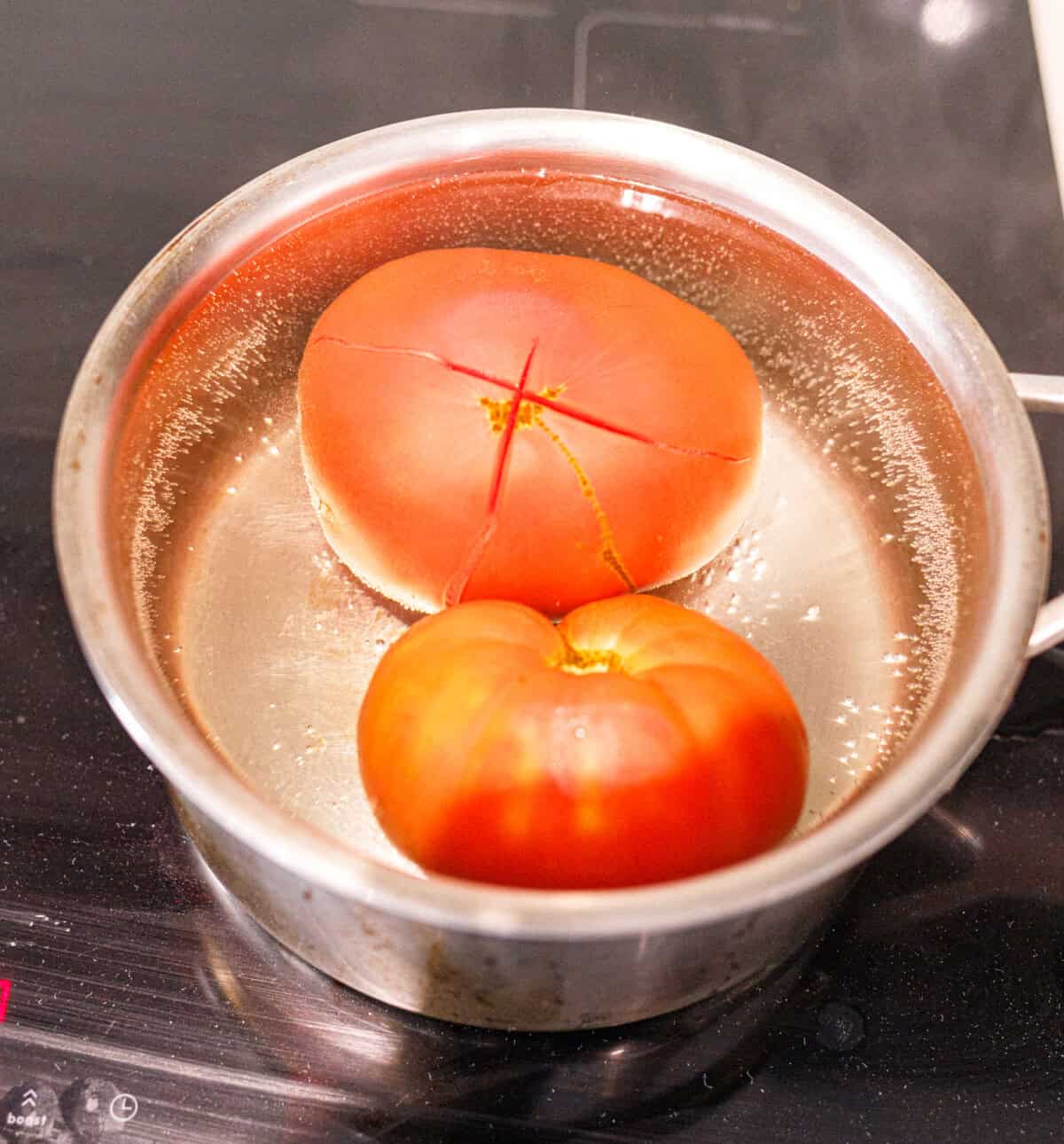
Thirty seconds in boiling water and the skins come off whole; leave them on and you spend the meal pulling little curled-up tomato skins off your fork.
Why You’ll Love This Recipe
Six eggs, a few peppers and tomatoes, and a block of feta feed four people for very little money.
It’s one pan and about thirty minutes, most of it the vegetables cooking down while you get on with something else.
It’s the meal I make when I want something quick that still counts as a proper meal.
What Is Mish Mash?
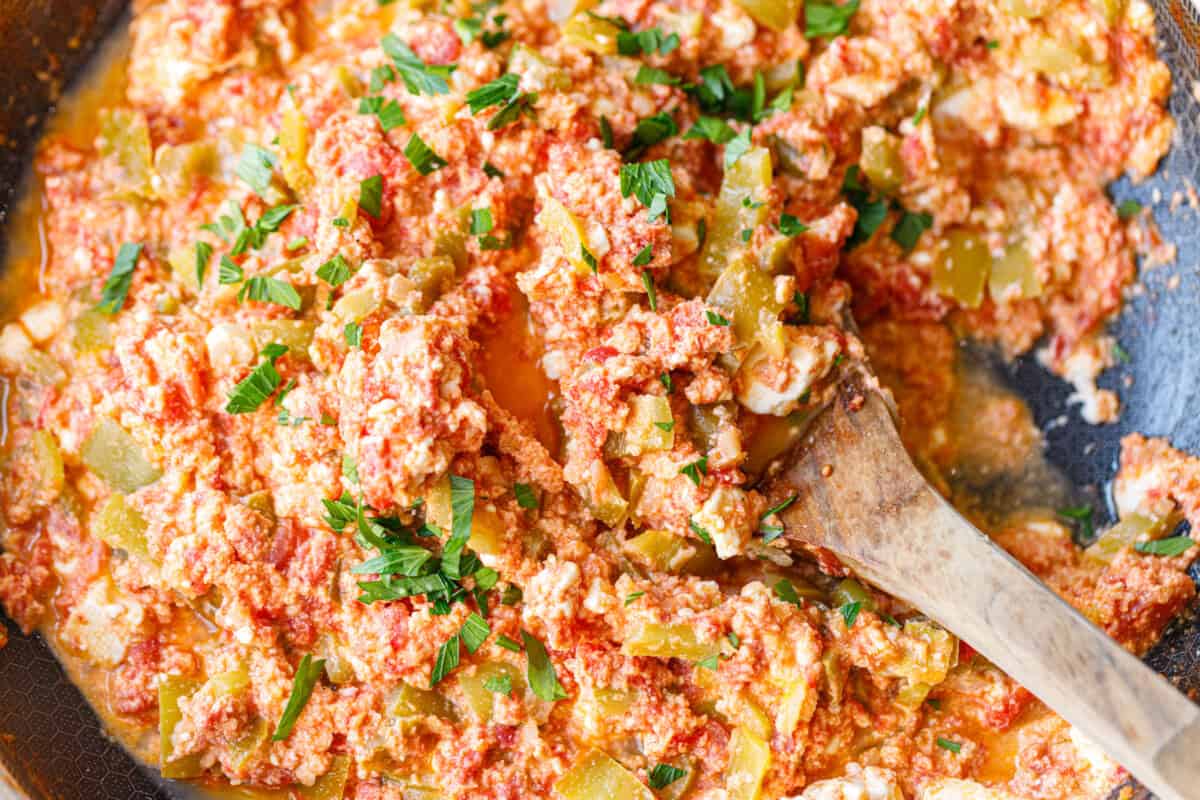
Mish mash is a Bulgarian dish of peppers and tomatoes cooked down into a thick base, then finished with beaten eggs and crumbled sirene — the Bulgarian brined white cheese that feta stands in for outside the country.
It sits between a scramble and a stew, and it’s eaten for breakfast, lunch, or a light dinner, always with bread.
It’s a forgiving recipe, and almost everything in it can move:
- Peppers. I use regular green peppers, chopped. Red peppers work and make it sweeter. Roasted peppers make a softer, sweeter version closer to a spread — plenty of families do it that way. Canned red peppers are fine too.
- Tomatoes. This version uses fresh tomatoes, blanched and peeled, and that’s how I like it best. Jarred tomato sauce or a homemade one will get you there faster.
- Cheese. Five ounces is what I use. More or less is a matter of taste, not technique.
- Onion. I use one, and no garlic. Some people add garlic — I don’t think it needs it. You can skip the onion entirely and the dish still works.
How to Make Mish Mash
Peel, soften, reduce, and the eggs go in last.
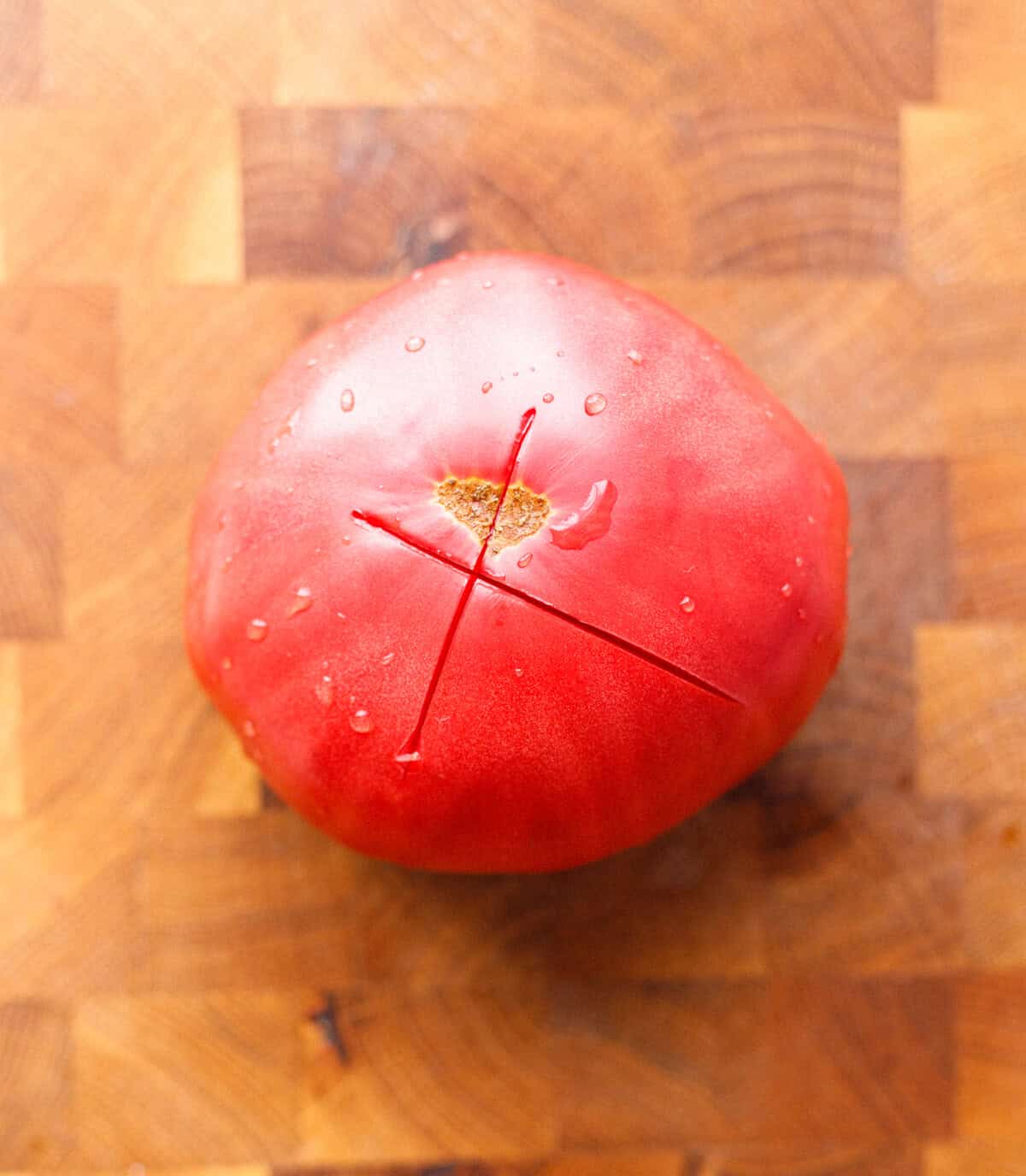
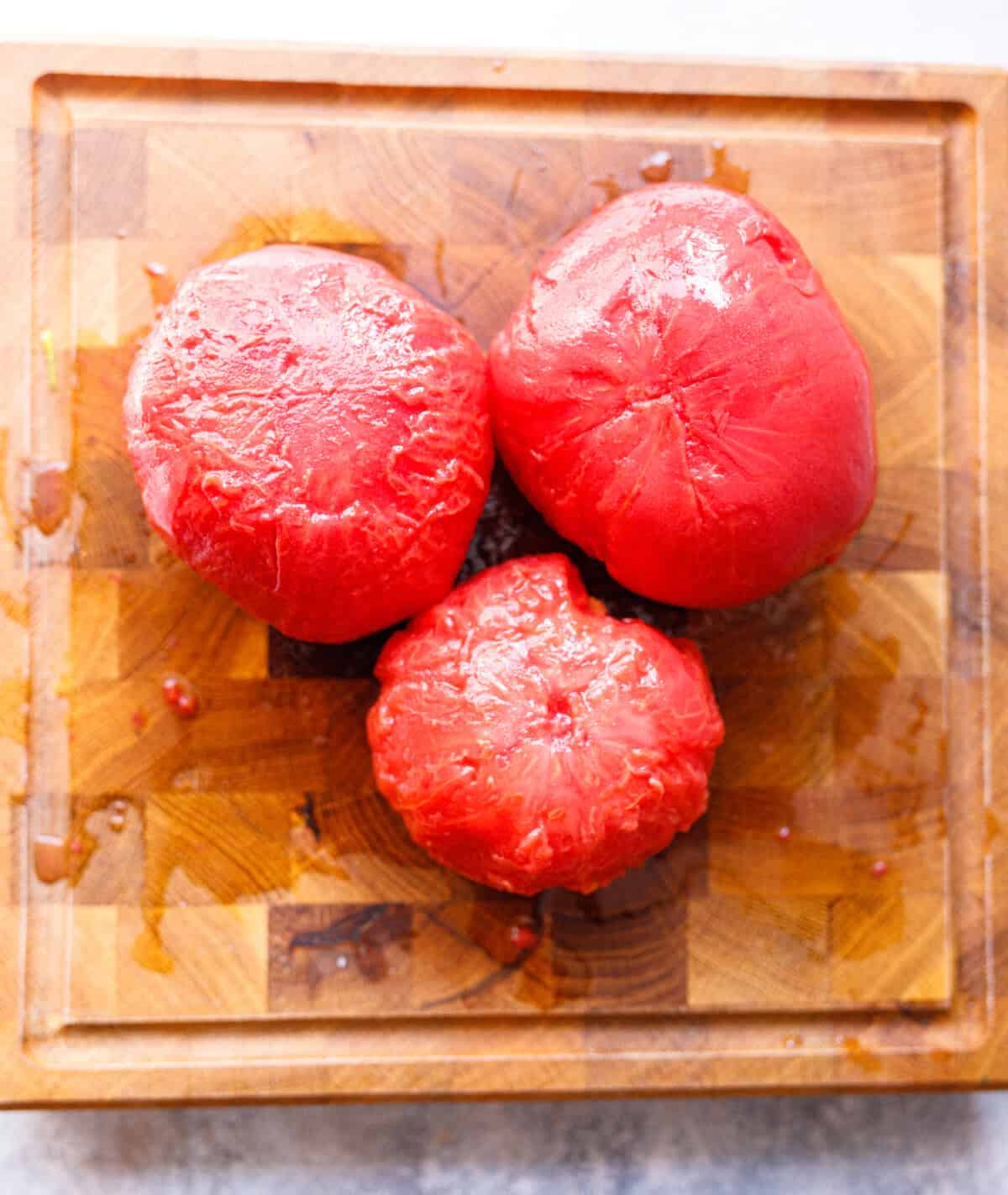
- Score a shallow X on the bottom of each tomato and drop them into boiling water for 30 seconds. Lift them out, peel the skins away — they should come off in sheets — and chop the flesh.
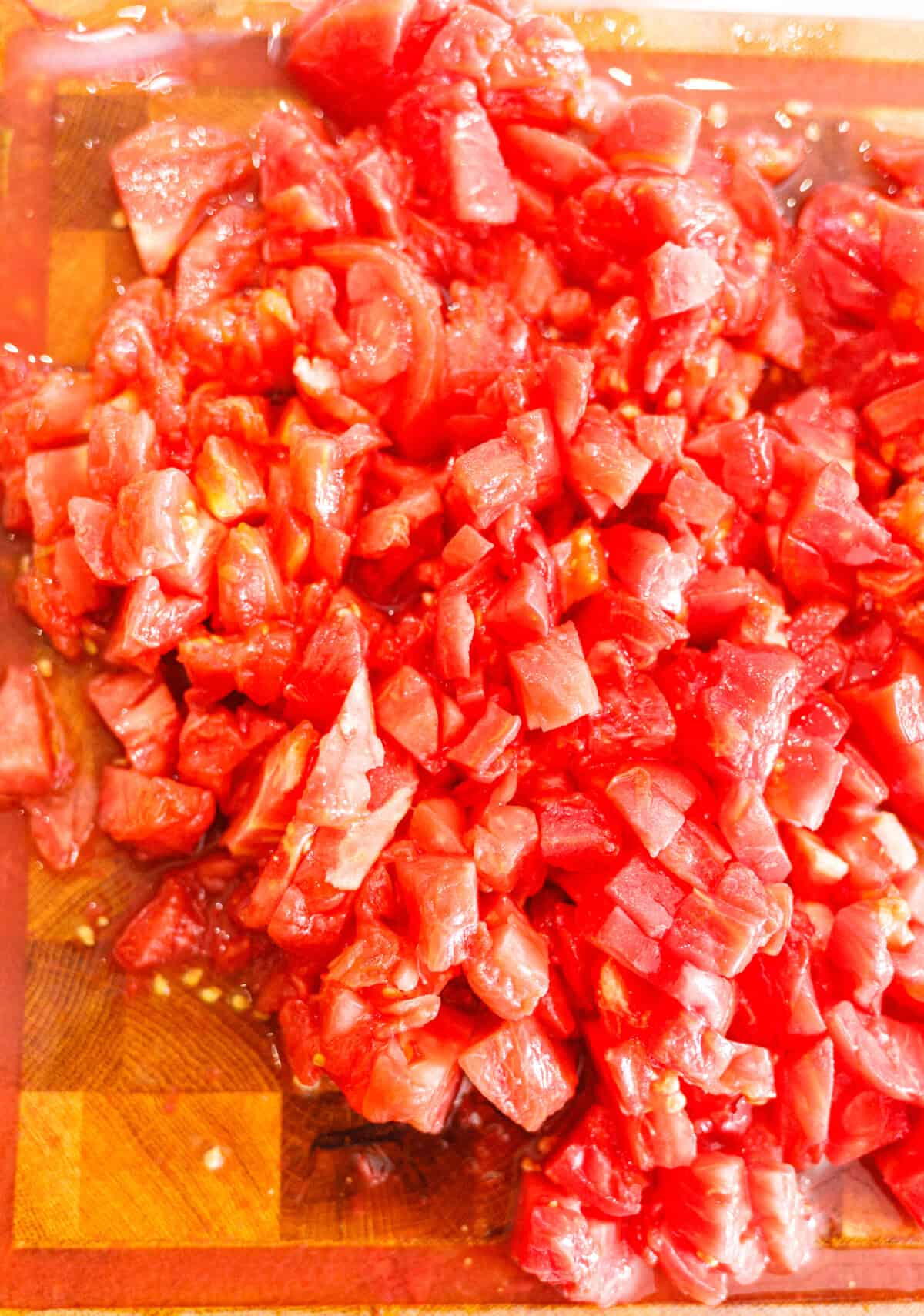
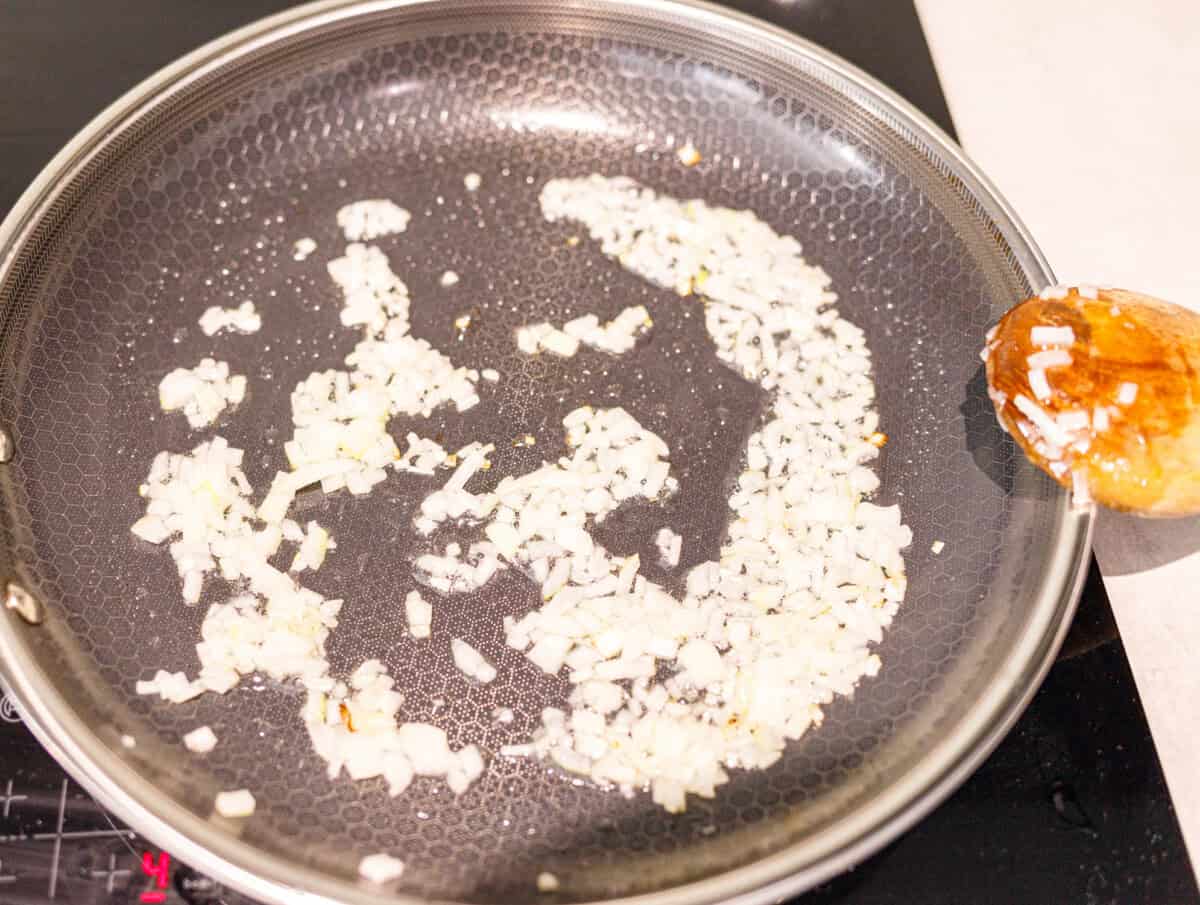
- Heat the oil in a large skillet over medium heat. Add the diced onion and cook, stirring so it doesn’t catch, until soft and translucent, 2 to 3 minutes.
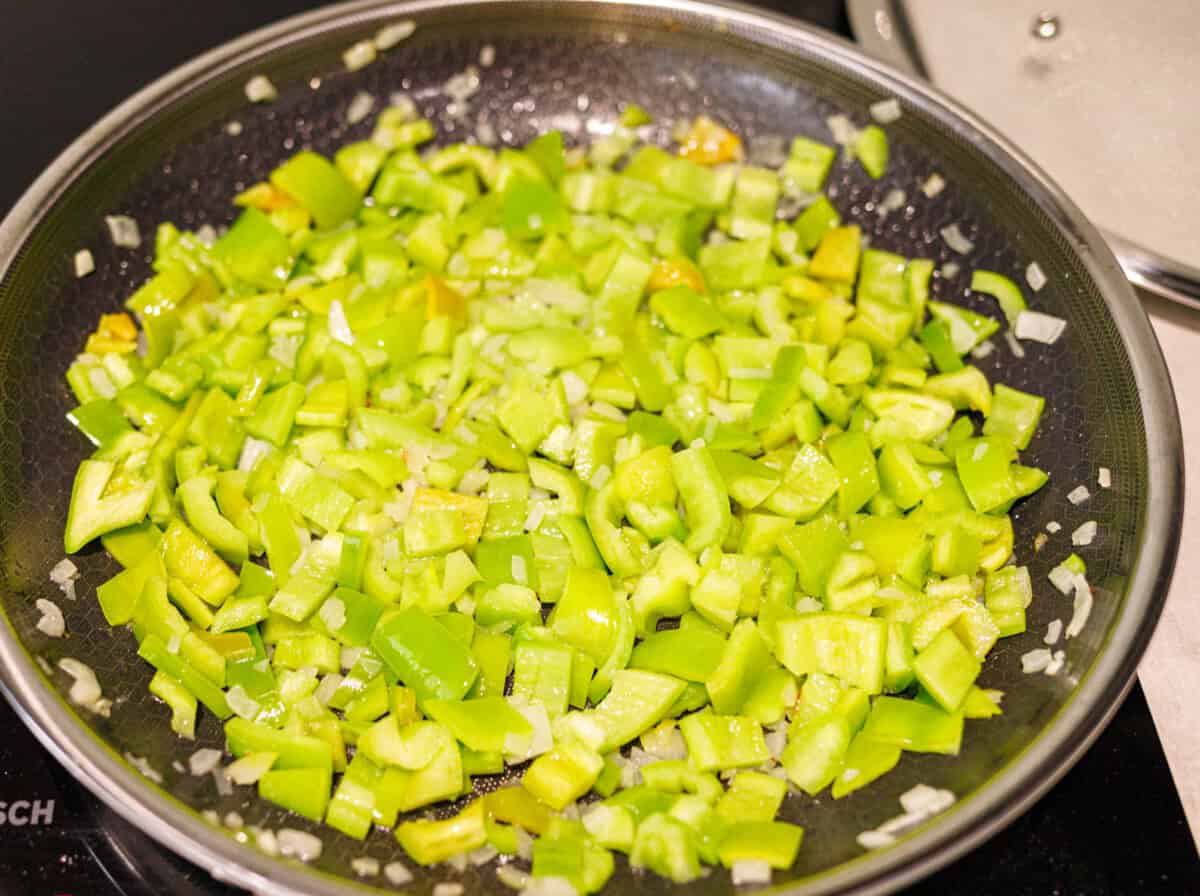
- Add the chopped peppers and cook until they soften and lose their raw edge, 6 to 8 minutes. They should still have some structure.
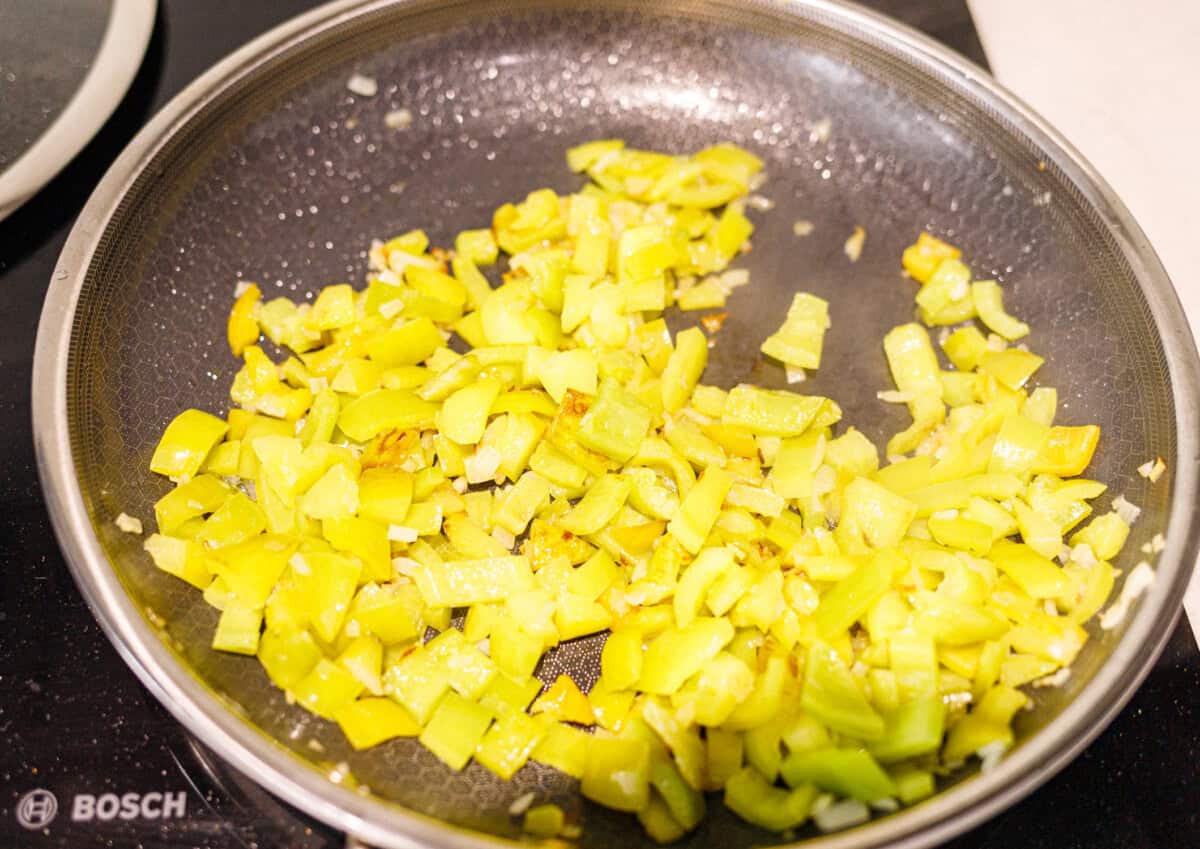
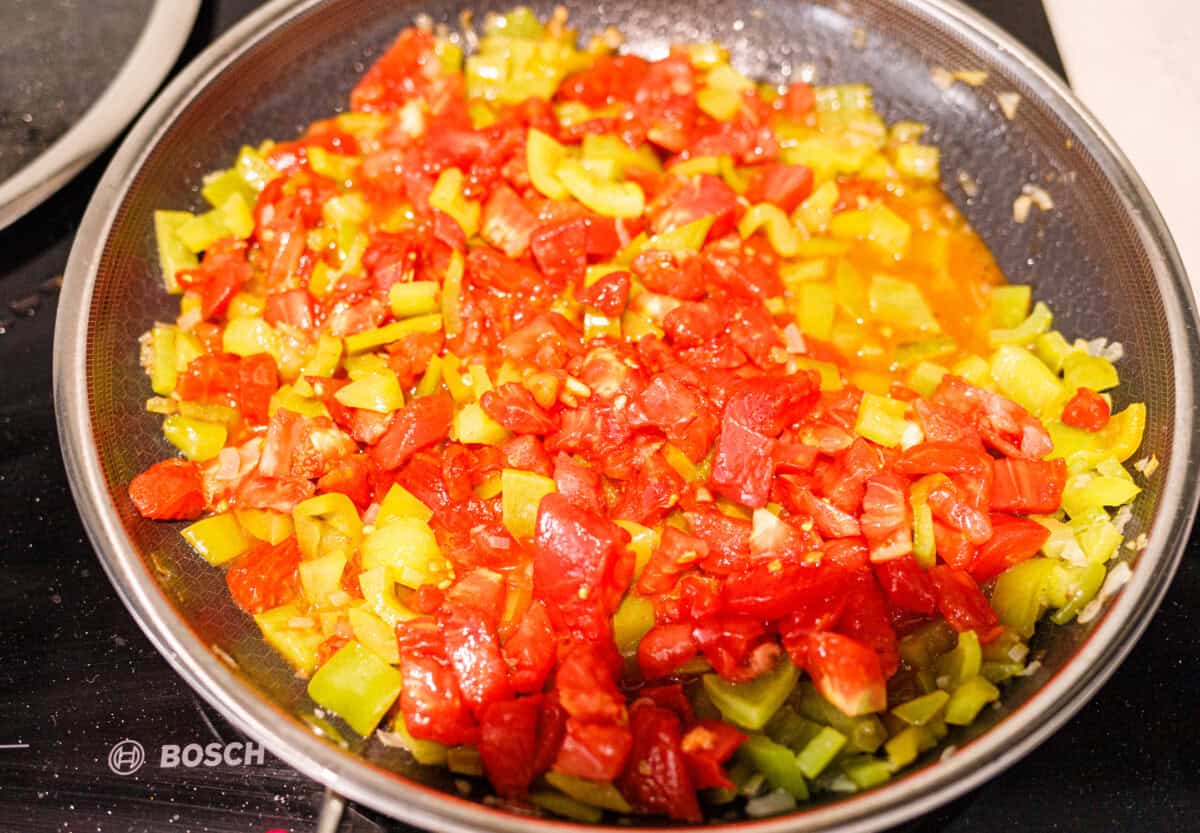
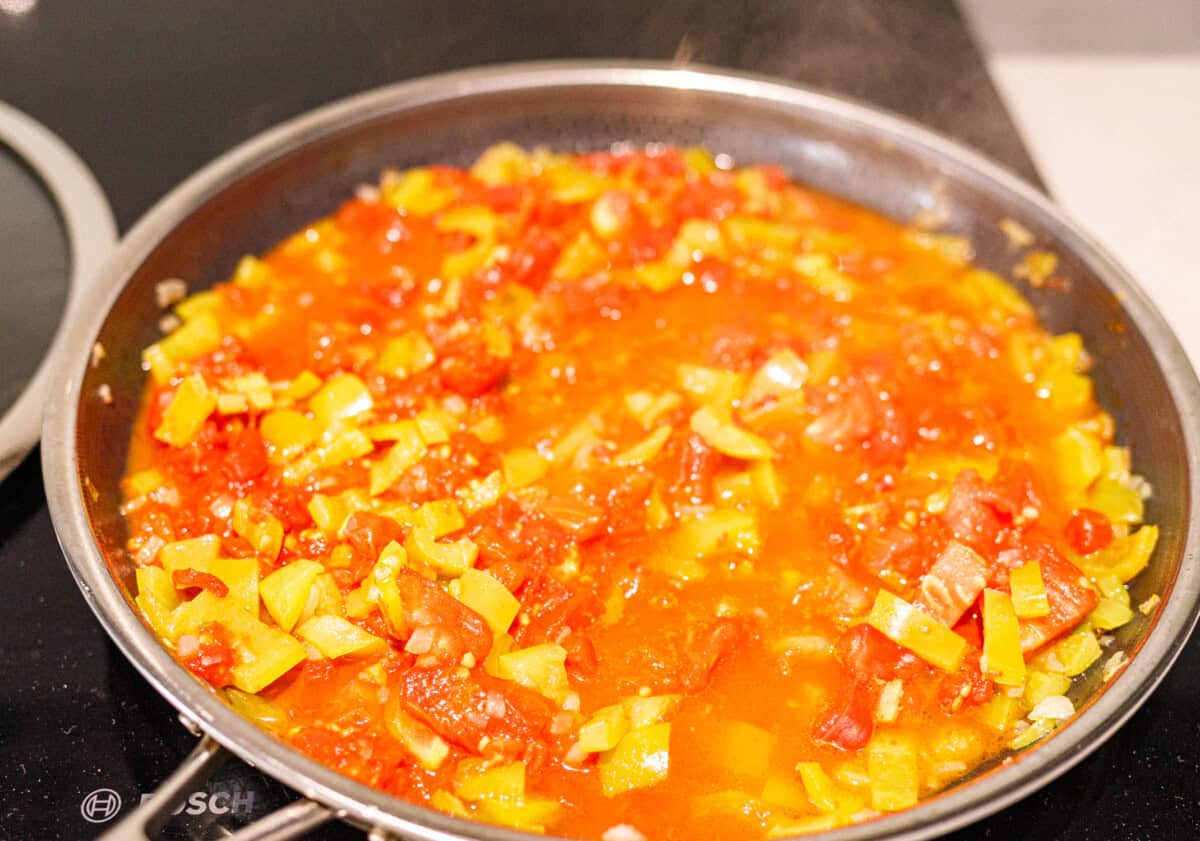
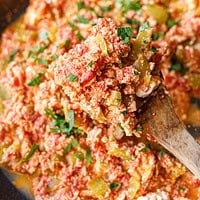
- Stir in the chopped tomatoes with the salt, sugar, and black pepper. Cook until the liquid has disappeared and the mixture looks thick rather than soupy — 10 to 15 minutes depending on how juicy your tomatoes were.
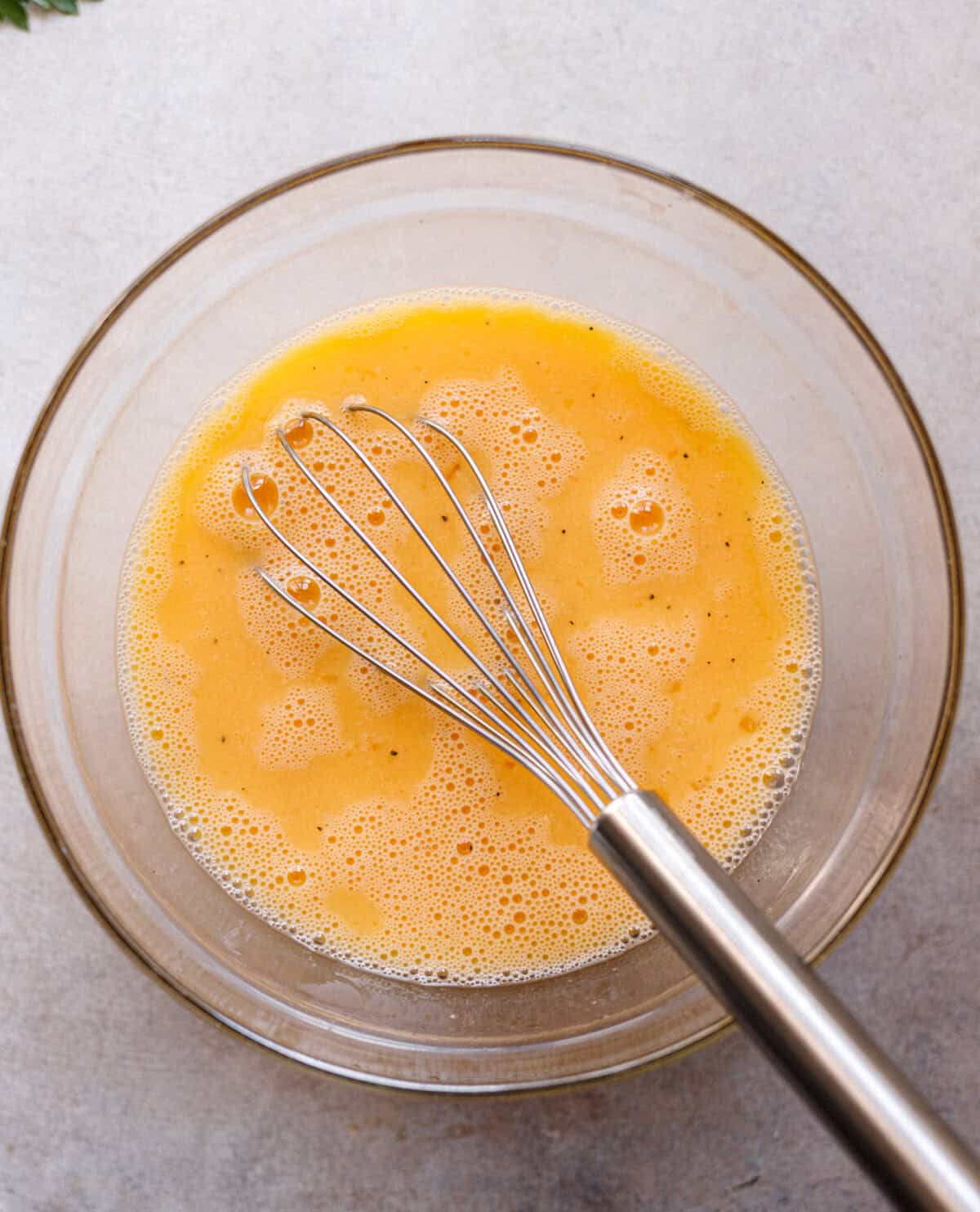
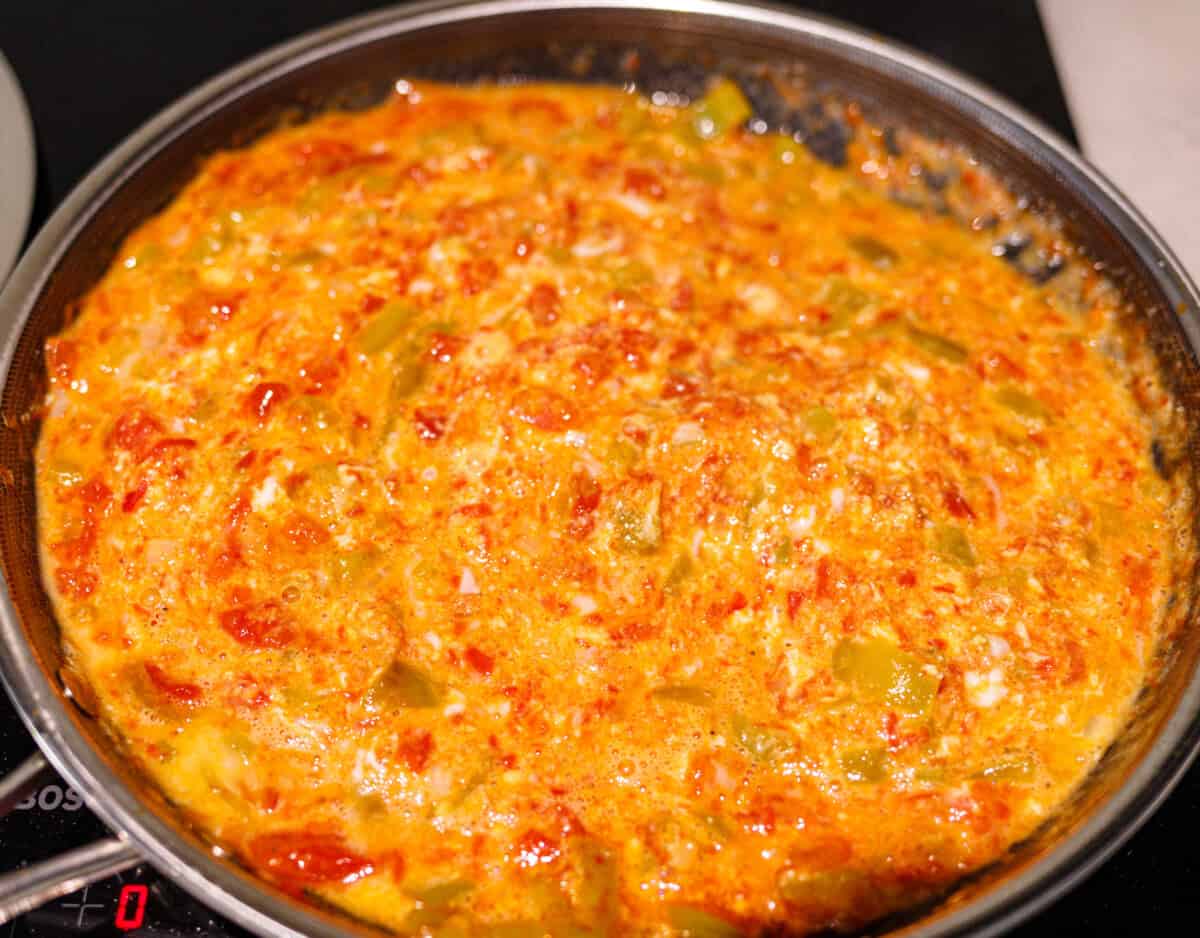
- Pour the beaten eggs over the vegetables and cook a few minutes, stirring gently and slowly, until they’re softly set. Pull the pan off the heat while they still look slightly underdone.
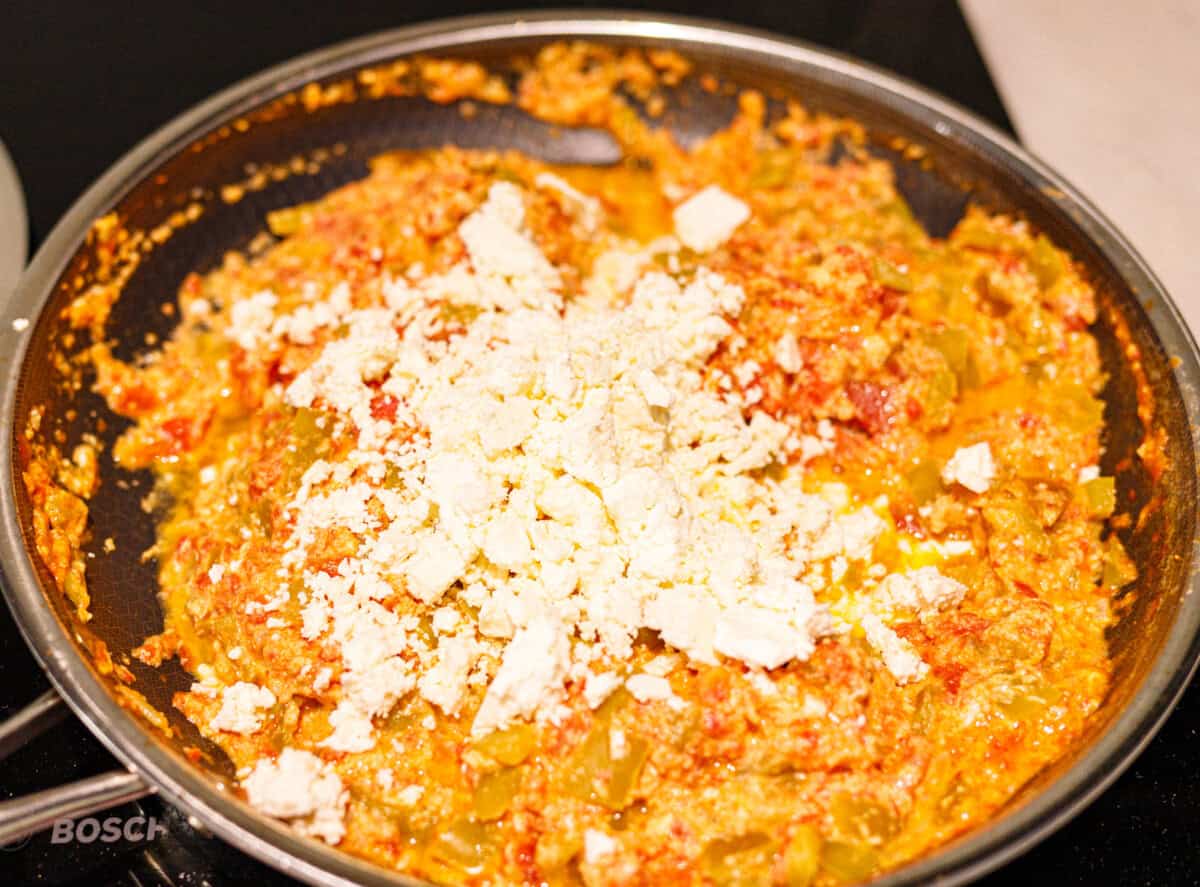
- Stir the crumbled feta through, scatter the parsley over the top, and serve straight from the pan with toasted bread.
Tips
Peel the tomatoes. Thirty seconds in boiling water and the skins slip off. Skip it and you’ll find tomato skins rolled into little tubes throughout the finished dish — it’s the difference between this tasting proper and tasting rushed.
Cook the liquid off completely before the eggs go in. A wet pan gives you eggs that never set properly. When you drag a spoon through and the trail stays open for a second before filling in, you’re there.
The quarter teaspoon of sugar isn’t for sweetness. It takes the metallic edge off tomatoes that aren’t fully ripe. With good summer tomatoes you can leave it out; in winter you’ll want it.
Take the pan off the heat early. The eggs keep cooking in the residual heat of a full skillet. If they look done in the pan, they’ll be overdone on the plate.
Stir the feta in at the end. Added late it stays in soft salty pockets. Cooked into the eggs it melts through and the whole thing goes uniformly salty, and you lose the bursts that make the dish.
Don’t stir the eggs like a scramble. Slow, gentle folds. You want soft curds sitting in the vegetables, not one even yellow mixture.

Serving Ideas + More Recipes
Bread isn’t optional here, and I use more of it than I should.
Thick country bread or anything with a real crust works better than sandwich bread — you need something sturdy enough to scoop with.
Sliced cucumbers on the side and something cold to drink is how it gets eaten in Bulgaria in summer.
If you’re putting together a Bulgarian table, Supa Topcheta is the meatball soup that comes first and this follows.
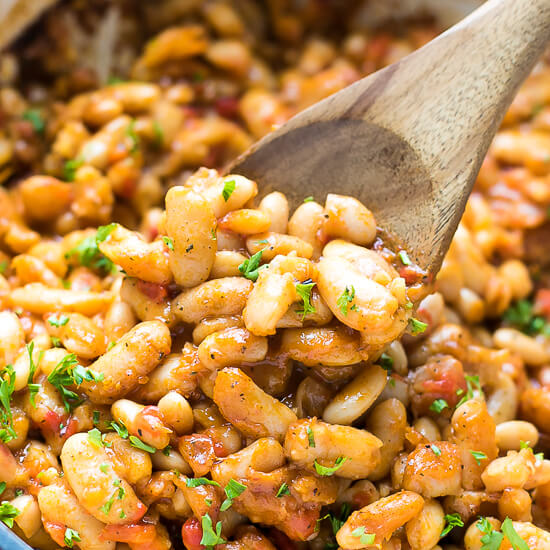
Bulgarian Beef Meatballs and Bulgarian Baked Beans round it out into a proper spread — the beans especially, since they want bread just as much as this does.
The rest are collected in my easy Bulgarian recipes.
For the bread itself, Spelt Focaccia tears well and holds up to a wet pan.
And if you’re cooking eggs for a crowd rather than a skillet for four, the Ham, Spinach, Zucchini and Mushroom Frittata is the baked version of the same idea.

Mish Mash (Bulgarian Peppers, Tomatoes and Eggs)
Ingredients
- 1 tbsp vegetable oil
- 1 small onion, diced
- 6 green peppers, chopped
- 3 large tomatoes
- 1/2 tsp salt
- 1/4 tsp sugar
- 1/4 tsp black pepper
- 6 large eggs, beaten
- 5 oz feta, crumbled
- 2 tbsp parsley, chopped, for topping
Video
Instructions
- Score an X on the bottom of the tomatoes and drop into boiling water for 30 seconds. Peel off the skins and chop.
- Heat the oil in a large skillet over medium heat. Cook the onion, stirring, until soft and translucent.
- Add the chopped peppers and cook until softened.
- Stir in the tomatoes, salt, sugar, and black pepper. Cook until the liquid has disappeared.
- Pour the beaten eggs over the vegetables and cook a few minutes, stirring gently, until softly set.
- Stir in the feta, top with parsley, and serve with toasted bread.
Notes
- Peel the tomatoes — the skins curl up and stay chewy if you leave them on.
- Jarred or homemade tomato sauce can be used instead.
- Green peppers are what I use; red peppers, roasted peppers, or canned red peppers all work.
- Onion can be skipped.
- Store in an airtight container in the fridge up to 3 days.
Nutrition
Nutrition information is automatically calculated, so should only be used as an approximation.
FAQ
What is mish mash? It’s a Bulgarian dish of peppers and tomatoes cooked down until thick, then finished with beaten eggs and crumbled white cheese. The name means roughly what it sounds like — a mix. You’ll sometimes see it presented as Turkish; I’m sharing it as the Bulgarian dish I grew up with. It gets eaten at any meal of the day, always with bread.
Do I have to peel the tomatoes? Yes, if you want it to taste right. Tomato skins don’t break down in the pan — they separate and roll into little tubes you notice in every bite. Score an X on the bottom, thirty seconds in boiling water, and they peel in one go. If you’re short on time, jarred or homemade tomato sauce is the better shortcut than leaving the skins on.
Can I use roasted peppers or red peppers instead? All of it works. Roasted peppers make a sweeter, softer version closer to a spread. Red peppers, fresh or canned, are sweeter than green. I use plain chopped green peppers because that’s the version I like — they keep more bite and a fresher flavor. None of these is wrong, they’re just different dishes at the end.
How do I store leftovers? Airtight container in the fridge for up to 3 days. Reheat gently in a pan rather than blasting it in the microwave, since the eggs tighten up with hard heat. Honestly it’s best fresh, but it makes a decent cold breakfast the next morning with more bread.