
This post may contain affiliate links. Please read our disclosure policy.
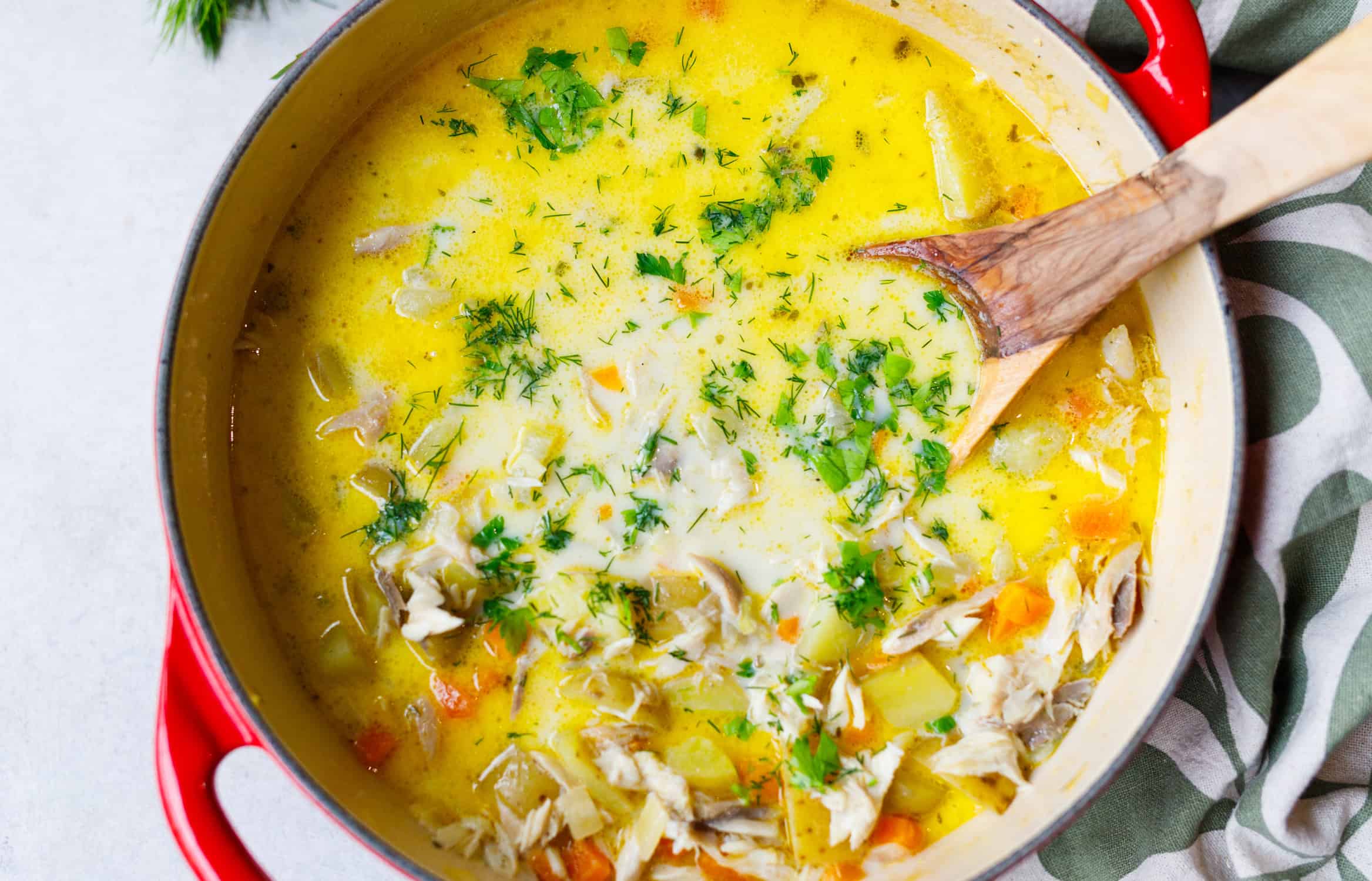
Quick Mackerel Chowder recipe – my son was deep in Roblox when he looked up and asked for fish chowder — mackerel chowder specifically. I rarely make chowder, and I had whole cleaned mackerel in the fridge, not fillets.
I roasted the fish, pulled the meat off the bones, and used the bones to make a quick stock on the stovetop while the vegetables cooked.

The result was on the table in 45 minutes and he asked for seconds.
The thing that surprised me: roasting the mackerel before adding it to the soup makes a real difference.
I expected the flavor to be strong and fishy — it was the opposite.
Roasting rounds it out. The cream and potatoes do the rest.
I used half vegetable stock and half the homemade fish stock I made from the bones, and that balance is what gives the chowder depth without being overpowering.
No flour — the potatoes thicken it naturally.
Why This Chowder Works
Mackerel is an oily fish with a strong flavor on its own, but in a cream chowder with potatoes, carrots, and celery it mellows completely.
The homemade fish stock from the roasted bones takes ten minutes and is worth every second — it is what separates this from a potato soup with fish dropped in at the end.
I tested it with just vegetable stock once and it was flat.
The bones make it taste like you did something special.
How to Make Mackerel Chowder

This recipe starts with roasting the whole cleaned mackerel — skin on, bones in.
You pull the flesh after roasting and simmer the bones for stock while your vegetables cook. Everything comes together in one large pot.
1. Roast the mackerel. Preheat oven to 400°F (200°C). Place the whole cleaned mackerel on a foil-lined baking sheet.
Drizzle with olive oil and season with salt and pepper. Roast for 18–20 minutes until the flesh is cooked through and pulls cleanly away from the bone.
You will know it is ready when the skin blisters slightly and the thickest part of the fish near the spine feels firm, not soft.


2. Make the fish stock from the bones. Let the fish cool for 5 minutes — just enough to handle it. Remove all the flesh and set it aside.
Place the bones, skin, and head into a small saucepan with 2½ cups cold water. Bring to a boil, reduce to a simmer, and cook for 10 minutes.
Strain and discard the solids.
The stock will be light golden and smell clean, not fishy.
3. Flake the fish. Go through the mackerel flesh carefully and remove any remaining small bones — mackerel has some fine ones along the lateral line.
Set the flaked fish aside.
It goes in at the very end so it does not overcook.
4. Sauté the vegetables. Melt 2 tablespoons butter in a large pot over medium heat. Add diced onion, carrot, and celery.
Cook for 5–6 minutes, stirring occasionally, until softened and the onion is translucent.
The vegetables should be tender but not browned.

5. Add potatoes and stock. Add diced potatoes (½-inch cubes cook evenly and hold their shape). Pour in the strained fish stock (2½ cups) and vegetable stock (2½ cups).
Add a bay leaf if you have one. Bring to a boil, then reduce to a steady simmer.
Cook for 15 minutes until the potatoes are completely tender — a fork should go through without any resistance.


6. Thicken if you want it thicker. The potatoes release starch as they cook and naturally thicken the broth.
If you want it noticeably thicker, stir in 1 tablespoon cornstarch mixed with 2 tablespoons cold water while the soup is simmering.
Cook for 2 more minutes.
This step is optional — skip it if you prefer a lighter, brothier chowder.
7. Finish with cream and fish. Reduce the heat to low. Remove the bay leaf. Stir in ½ cup heavy cream and the flaked mackerel.
Heat gently for 2–3 minutes — do not bring it back to a boil or the cream will separate.
Taste and adjust salt and pepper.
A squeeze of lemon at the end brightens everything.


Tips
Do not boil after adding the cream. This is the only way you can ruin this soup at the end. Once the cream goes in, keep the heat low and stir gently. A hard boil causes the cream to break and the texture goes grainy.
Cut the potatoes small and even. Half-inch cubes cook through in 15 minutes without falling apart. I have made the mistake of cutting them too large — the outside gets mushy before the inside is done.
Make the stock while the vegetables cook. The timing works out perfectly: by the time you have sautéed the onion, carrot, and celery and added the potatoes, your fish stock is already strained and ready. No extra time needed.
Leftovers keep for 2 days in the fridge. Reheat gently on the stovetop over low heat. The potatoes absorb liquid overnight, so add a splash of broth or water to loosen it back up. Do not microwave on high.
On the flour question: You do not need it. The starchy potatoes do the thickening. If you want more body, the cornstarch slurry in step 6 is enough. Flour works too — stir 1 tablespoon into the butter before adding the stock and cook for 1 minute to remove the raw taste — but it is not necessary.

Serving Ideas
This chowder is a full meal. Crusty bread alongside — a thick slice, a warm baguette, or even plain toast — is all you need to soak up the broth.
If you want something fresh on the table, a simple cucumber salad with a splash of vinegar cuts through the cream nicely.
My kids are happy with just the soup and bread.
If you make a lot of soup at home, these are worth trying next:
If you are building a full fish dinner, Hot Smoked Salmon is another way to work with oily fish that does not need much technique to come out well.
For a weeknight cream soup that uses the same vegetable base, Creamy Mushroom Sauce is one I make on repeat.
And if you want to cook more whole fish in the oven, Halibut (Oven Baked) is a simple starting point.

FAQ
Roasted at 400°F, a whole cleaned mackerel (about 250g each) takes 18–20 minutes. You will know it is done when the flesh at the thickest point — near the spine — feels firm and pulls away from the bone without resistance. If the fish is smaller, check at 15 minutes. Boiling takes 8–10 minutes at a gentle simmer — pull the fish when the flesh turns opaque all the way through and starts to separate from the bone on its own.
Roasting is the main thing. Raw or boiled mackerel has a stronger smell while it cooks — roasting concentrates the flavor and mellows the fishiness before the fish ever hits the soup. The half-and-half stock ratio (fish stock plus vegetable stock) also keeps it balanced. I made the mistake once of using only fish stock and it was too intense. The cream and potatoes do a lot of work too — by the time the chowder is finished, the mackerel flavor is there but not sharp.
Yes — use all vegetable stock (5 cups total) if you do not want to simmer the bones. The chowder will taste lighter and less layered, more like a cream vegetable soup with fish in it. It is still good. If you want some of that depth without making stock, add a teaspoon of fish sauce to the pot when you add the stock — it blends in completely and gives the broth more body.
Yes — this recipe has no flour and no thickeners with gluten. The potatoes thicken the broth naturally. If you add the optional cornstarch slurry, cornstarch is also gluten-free. Mackerel is naturally low in carbs as well — the main carbs in this chowder come from the potatoes and carrots.

Mackerel Chowder Recipe
Ingredients
Fish:
- 2 whole cleaned mackerel, about 1–1.2 lbs / 500g total
- 2 tablespoons olive oil
- Salt and pepper
Fish stock:
- Reserved mackerel bones, skin, and head
- 2½ cups 600ml cold water
Chowder:
- 2½ cups 600ml vegetable stock
- 1 lb 450g potatoes (about 3 medium), cut into ½-inch cubes
- 2 medium carrots, diced
- 3 stalks celery, sliced
- 1 medium onion, diced
- ½ cup 120ml heavy cream
- 2 tablespoons butter
- 1 bay leaf, optional
- Salt and pepper to taste
- Lemon, optional, to finish
Optional thickener:
- 1 tablespoon cornstarch + 2 tablespoons cold water
Video
Instructions
- Preheat oven to 400°F (200°C). Place mackerel on a foil-lined baking sheet, drizzle with olive oil, season with salt and pepper. Roast 18–20 minutes until flesh pulls cleanly from the bone.
- Cool 5 minutes. Remove and flake flesh, set aside. Place bones, skin, and head in a small saucepan with 2½ cups cold water. Bring to a boil, simmer 10 minutes, strain.
- Melt butter in a large pot over medium heat. Add onion, carrot, and celery. Sauté 5–6 minutes until softened.
- Add potatoes, strained fish stock, and vegetable stock. Add bay leaf. Bring to a boil, reduce to a simmer. Cook 15 minutes until potatoes are fork-tender.
- Optional: stir in cornstarch slurry, cook 2 more minutes.
- Reduce heat to low. Remove bay leaf. Stir in cream and flaked mackerel. Heat gently 2–3 minutes. Do not boil. Season to taste. Finish with lemon if desired.
Notes
Do not freeze — cream soups lose texture when thawed; refrigerate up to 2 days
No flour needed — potatoes thicken naturally; cornstarch slurry optional for a thicker result
Nutrition
Nutrition information is automatically calculated, so should only be used as an approximation.




So where are the recipes for the pancakes, etc? When I click on it to download the PDF it takes me to the recipe for soup.
Could I use tinned smoked Mackeral?
If someone wanted to freeze some for a later date could a portion be separated and frozen before the cream is added?
Hi James, yes canned mackerel will work. Freezing – yes, you can freeze. For best results add the cream after defrosting, but honestly you can add it even before freezing. Just keep in mind it may separate with reheating. But it may not separate. You can do whatever option works better for you.